The Wrong Question, and the Right One
About once a week, someone asks me whether they should buy a used DMG-MORI machine or 'just get a 3D printer.' That's the wrong question. The right one is: What am I actually manufacturing, in what volumes, and at what tolerances?
I've spent the last eleven years running parts in a small contract shop, and I've personally made (and documented) 23 significant mistakes, totaling roughly $74,000 in wasted budget and material. That's embarrassing to type, but it's why I now maintain our team's pre-purchase and pre-job checklist. If you're deciding between a used DMG MORI CNC lathe, a desktop FDM/DLP printer, or something as advanced as hybrid additive, the decision isn't about which technology is 'better.' It's about which one matches your worst real-world job.
I group the cases into three scenarios. There's no universal answer because your parts, volumes, and tolerance requirements are different from the next shop's.
Scenario 1: You Need Machined Accuracy Without Heroics
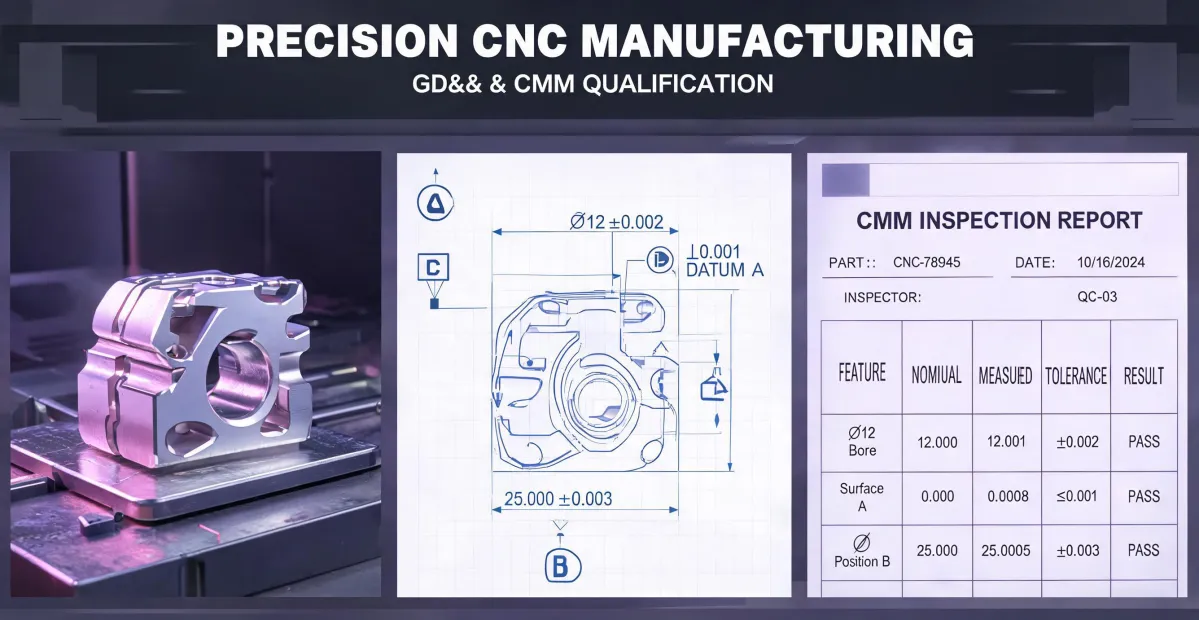
If the part has a bearing seat, a threaded spindle, a mating flange, or any dimension below ±0.05 mm that genuinely matters, no 3D-printed part will reliably get you there. This is where a CNC lathe earns its floor space. In my experience, a used DMG MORI CNC lathe is the most honest route to that accuracy without paying new-machine prices.
I'm not saying every used DMG MORI CNC machine for sale is a gem. In 2021, we found a used DMG-MORI CNC machine for sale at 30% below the next comparable listing. The price felt like a gift. The ballbar test showed X-axis circularity error over 0.06 mm—enough to destroy any precision work. We passed. The seller eventually dropped the price again, and I'm guessing someone else bought it without testing. Don't be that person.
If you're in Scenario 1, the checklist I use is simple:
- Bring a third-party inspector or at least a calibrated ballbar and spindle runout gauge. Don't rely on test cuts done by the seller.
- Pull the turret cover and look for crash damage. Scraped turret plates and fresh paint are red flags.
- Check the control and axis drives for error logs. A 'small' axis alarm can be the first sign of a blown encoder.
- Ask for power-on hours and tool-magazine usage. A low-use machine with poor maintenance is worse than a high-use machine with good service history.
Used DMG MORI machines get listed for sale every quarter. That's normal. What separates a safe buy from a trap is verification. The keyword here is used, not 'bargain.'
Scenario 2: You Need Speed, Surface Detail, or a Hobby Workflow
Now the other end. If you're designing brackets, custom jigs, replacement knobs, or anything where a small amount of porosity or layer texture is acceptable, 3D printing is probably the better answer. The problem is that people ask 'FDM vs DLP 3D printing' as if one is objectively superior. They're not.
According to ISO/ASTM 52900, FDM is a material extrusion process and DLP is a vat photopolymerization process. Translation: FDM melts and squirts plastic filament; DLP cures liquid resin with a light engine. From the outside, FDM looks cheaper and DLP looks higher-end. The reality is the opposite in practice: FDM is fast, flexible, and forgiving, while DLP gives finer detail but demands washing, curing, and resin management.
Here's the counterintuitive part. If you're integrating 3D printing into hobbies, I usually recommend starting with FDM, not DLP. Why? Because the hobby most people actually want is 'making things,' not 'post-processing resin.' FDM gets you to a physical part in a couple of hours with zero chemical cleanup. DLP gets you a prettier part but adds cleaning, curing, and resin-management chores. I learned this the hard way after spending $1,100 on a DLP printer that sat untouched for five months because the cleanup felt like a second job.
Don't get me wrong: DLP is the right tool for miniatures, injection-molded-like prototypes, or parts with small, sharp geometry. But for a first printer in a hobby workshop, FDM will get you further sooner.
Scenario 3: You Need Additive Geometry Plus Machined Surfaces — Hybrid
The most overhyped idea in our industry is that every CNC shop should add a hybrid machine. Hybrid processes in additive manufacturing—where metal is deposited onto a part, then machined to final tolerances in the same setup—are powerful, but they're not a technology tier above a desktop printer. They're a different animal.
I have the scar to prove it. In Q1 2023, we quoted a hybrid repair job for a damaged die using laser parameters from a machining forum. Deposition looked fine for the first few passes. Then the top layer delaminated. Total loss: $3,800 in cobalt-chrome powder and a six-day schedule slip. The machine worked exactly as specified; my assumptions didn't match the material's real process window.
Hybrid processes make economic sense for high-value repair work—turbine blades, forging dies, injection molds—where the replacement cost is tens of thousands but the added material is a few grams. They also make sense when you need a feature on a near-net shape that can't be machined on its own. For that, a machine like DMG MORI's LASERTEC 3D integrates laser metal deposition with full 5-axis machining. But it's not a hobbyist step up from FDM/DLP. It's a serious production system with a serious learning curve.
If someone tells you 'hybrid is just a 3D printer with a CNC on top,' they haven't run one. Run far away.
How to Tell Which Scenario You're In
It comes down to three questions:
- What tolerance actually matters? If a bearing seat, a thread, or a mating surface is on the drawing, you're in Scenario 1. If the part just needs to fit in a hole or look right, Scenario 2.
- How many parts do you need? One-off prototypes: print. A thousand identical metal parts: start looking for a used DMG MORI CNC machine for sale. For a hybrid repair job, you're not making hundreds of parts—you're saving one expensive one, and that's Scenario 3.
- How much process mess are you willing to own? FDM has filament and supports. DLP has resin and washing. CNC has tooling and offsets. Hybrid has powder, shielding gas, and thermal control. Every option has a hidden workflow. Pick the one whose hidden workflow matches your actual tolerance for frustration.
I still kick myself for the year I spent trying to force a 3D printer to hold a tolerance it never could. If I'd started the used-machine hunt earlier, that year would have been profitable instead of frustrating.
I can only speak to job-shop scale operations. If you're in aerospace, medical implant manufacturing, or any regulated supply chain, you need qualification and traceability far beyond what I've described. My checklist is a starting point, not a certification. The right specialist will tell you when you're outside their lane. I'd rather work with someone who knows their limits than a generalist who overpromises.
One more time-bound note: this was accurate as of early 2025. The used CNC market shifts as older machines get replaced by automation, and 3D printer models evolve even faster. Verify current service records, current powder prices, and current printer specs before you commit.
Buying equipment is never about winning an argument about which technology is best. It's about matching a tool to the part you have to make tomorrow. Now you know which part of that equation to think about first.