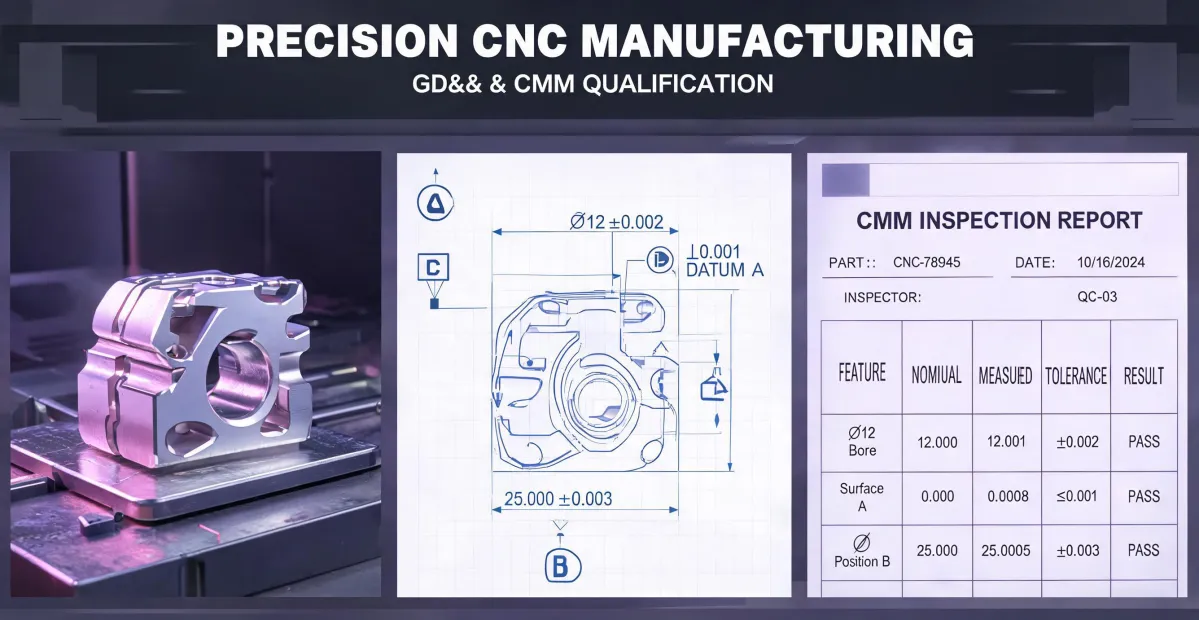
I coordinate emergency machining for manufacturers. In the last four years I've handled 200+ rush orders, including same-day turnarounds for medical and aerospace clients. This article is about a comparison I do constantly: DMG MORI milling on your own floor vs. a CNC machining service Minneapolis companies use. It's not a brand war. It's about getting parts to tolerance before a deadline turns into a disaster.
The comparison framework is simple. I look at four things: turnaround, total cost, tolerance, and risk. Same lens I'd use if I had 48 hours before a line shutdown and a part that needed a reamed hole with a tolerance most shops don't publish. Both routes can work. They just carry different risks at different points in the schedule.
Turnaround: Your Machine vs. Their Queue
An in-house DMG MORI milling machine has one obvious advantage: no queue. If the part is already programmed and proven, you can be cutting chips in minutes. That's how we saved a medical client's mold repair in March 2024. Thirty-six hours before their deadline, the original vendor said a replacement core wouldn't ship for two weeks. We pulled up a similar DMG MORI milling cycle, adjusted the offsets, and had the part ready overnight.
A CNC machining service Minneapolis manufacturers rely on can also move fast, but there are constraints: their queue, their shifts, their inspection process. If they haven't run a similar part recently, setup alone can burn hours. The shop that quotes the fastest turnaround might simply have a gap in their schedule. That's not a red flag—it's just a different risk.
My honest conclusion: if the part is already proven, in-house DMG MORI milling wins on raw speed. If it's a first-time run, a service with an open cell and an experienced programmer will usually get you to a good part faster than you can figure out a machine you don't run often.
Total Cost: The Quote That Lies
On cost, the easy comparison is service quote vs. machine-hour rate. But total cost includes tooling, workholding, programming, inspection, and the cost of missing a deadline. That last one is the number most people forget.
Last quarter I priced an emergency job two ways. Using our own DMG MORI milling center, the fully loaded internal cost was about $1,050—machine time, operator, tooling, inspection. A local CNC machining service quoted $1,850. On paper, in-house was cheaper. But this was a first-time part with a tight position tolerance and reaming involved. If the reamer setup was off, we'd burn $1,050 in material and hours and still be late. The service had run similar components for medical clients. We paid the premium, and they delivered 11 hours later.
The counterintuitive part: in-house was cheaper per hour, but the service was cheaper per successful part. When I compared the two runs side by side, I finally understood why the first article matters more than the machine brand. The lowest priced quote is only cheap when the part passes inspection the first time.
Tolerance and Quality: The Reamer Tool Test
Precision is where the machine brand matters less than the process around it. A DMG MORI milling machine can hold tight tolerances. So can many other machines. The difference is how long it takes to prove it.
For a straight, accurate hole, reaming is the classic approach. The reamer tool has to match the drilled hole size and the required finish. On a DMG MORI milling machine, you can program interpolated reaming or use a dedicated reamer tool in a floating holder. On a service's machine, the same reamer tool works—if the service has the right holder, speeds, and coolant pressure. That 'if' is where parts get scrapped.
In March 2024, I had to decide whether to trust a new shop with a reaming operation on a 0.3125-inch hole with a 0.0005-inch tolerance band. Had four hours to decide before the material had to be cut. Normally I'd insist on a full process capability study. There was no time. I went with the shop because they emailed a photo of their reamer gauge, the tool holder, and a previous in-process inspection sheet from the same machine. Limited criteria, but it was the best signal available.
Even after I confirmed the order, I kept second-guessing. What if the reamer tool was worn and the hole opened up on the last few parts? I didn't relax until the second-piece inspection report came back. That experience is why I push the prevention angle so hard: 5 minutes of verification beats 5 days of correction. According to DMG MORI's own documentation (dmgmori.com), complete machining in one setup is a way to reduce re-fixturing errors. I've seen that hold up on more rush jobs than I can count.
Risk and Hidden Surprises
The dimension that doesn't show up in most quotes is risk. In-house, the risk sits on your floor. If the part fails, you own the mistake. With a service, the risk sits one step away—but you trade it for communication risk. I've had shops that quoted fast, went silent for two days, then shipped a part that didn't match the drawing (note to self: check communication cadence before the first order).
That's why I now have a 12-point checklist for every outside vendor. It includes a photo of the setup before the first cut, a material certificate, and a written confirmation of the datum structure. The checklist came from a $8,000 mistake in 2023, when we tried to save money on an unproven service. Since then, that checklist has saved us at least twice that amount. Prevention is not a boring step. It's the cheapest insurance in precision machining.
What About a DMG MORI 3D Printer? And Resin Cost?
When clients ask about additive manufacturing, the answer depends on what the part is made of and what it has to survive. A DMG MORI 3D printer—like the LASERTEC line—is a metal additive system, not a desktop resin printer. If you're making a titanium bracket with complex internal cooling channels, a DMG MORI 3D printer can be worth the investment. But it needs powder handling, heat treatment, and post-machining. That's not a 30-minute job; it's a process line.
For plastic prototypes, people often ask me: how much does 3D printer resin cost? The honest answer is that standard resin is around $25 to $80 per liter, based on vendor pricing I checked in March 2025; engineering resins can go from $150 to $300 per liter. Prices as of March 2025; verify current rates. But a resin part won't hold a machined tolerance and won't take tool load. If the part needs a reamed hole and a structural surface, subtractive or hybrid machining is still the answer.
Which Option Should You Choose?
Here's the scenario guide I give to anyone who calls me with a broken part at 4 p.m.:
- If the part has been machined before and the program and tooling already exist, use your own DMG MORI milling machine. You'll be done before a service can return a quote.
- If it's a first-time part with tight tolerances—especially something that needs reaming with a reamer tool—use a CNC machining service Minneapolis companies have already proven for similar work. Let them absorb the setup risk.
- If the part needs complex internal features that conventional milling can't reach, investigate a DMG MORI 3D printer or partner with a metal additive service. But don't expect it to be the fastest route for a single small part.
- If it's a plastic prototype for fit or form, a resin printer is fine. That's when resin cost matters. Treat it as a verification step, not a production solution.
The bottom line isn't 'always buy DMG MORI' or 'always use a local shop.' It's: know your part, know your tolerance, and know which risks you can absorb. In emergency machining, the cheapest path is the one with a proven process. Everything else is a gamble.