Drawing and model alignment
The team compares CAD, PDF drawings, revision notes, and quality clauses. Conflicting dimensions, missing datums, unclear finish notes, and unrealistic tolerance stacks are separated into review items.
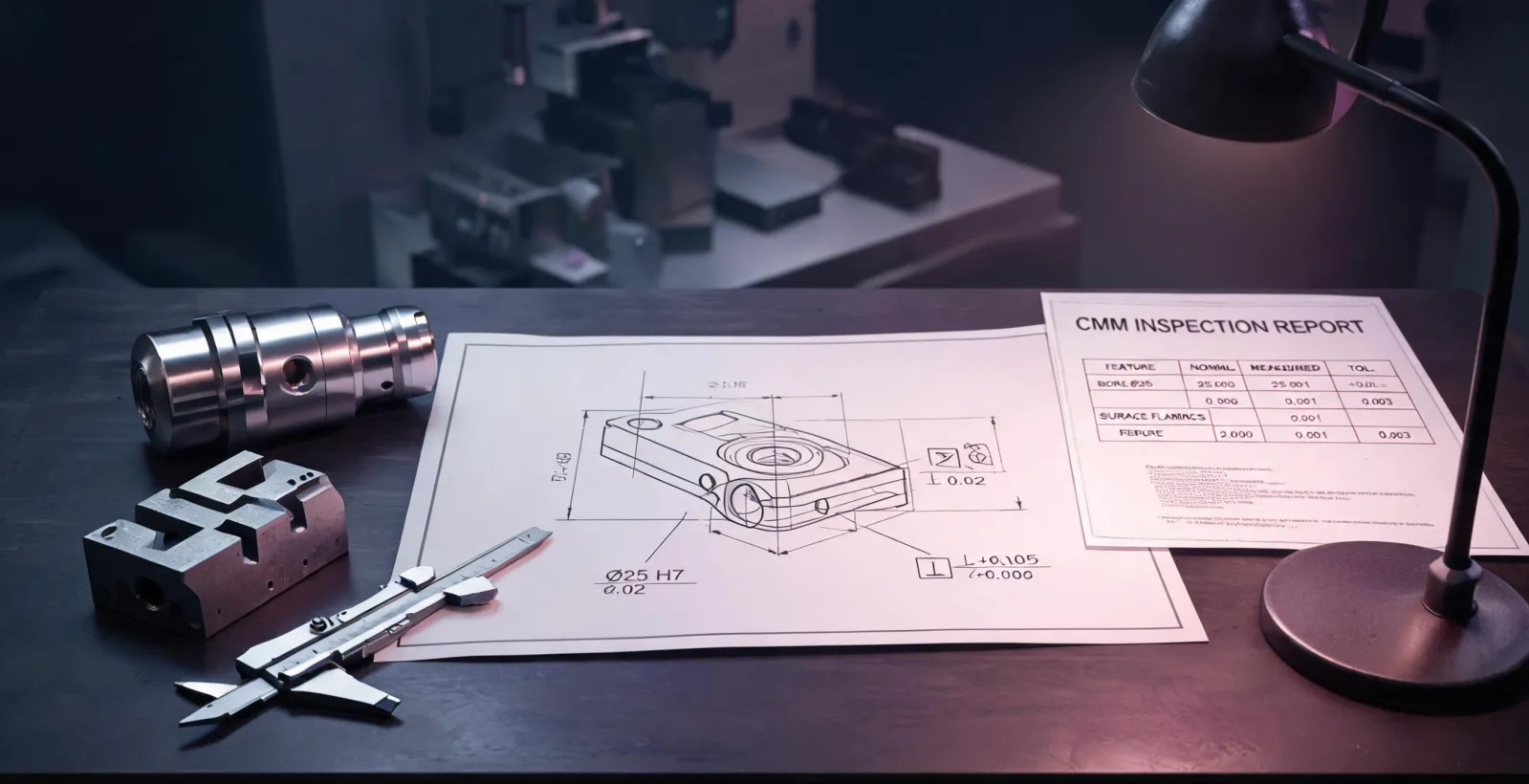
The team compares CAD, PDF drawings, revision notes, and quality clauses. Conflicting dimensions, missing datums, unclear finish notes, and unrealistic tolerance stacks are separated into review items.
Machining centers, lathes, toolholders, fixtures, and secondary operations are matched to the geometry. The route is chosen for stability, inspection access, and repeatability rather than lowest apparent cycle time.
Critical dimensions are assigned CMM, gauge, surface roughness, or visual inspection methods. FAI requirements and sampling assumptions are made visible in the quote response.
Material certificates, special-process evidence, C of C, deviation notes, and packaging requirements are bundled into the production plan so shipment does not stall at documentation.
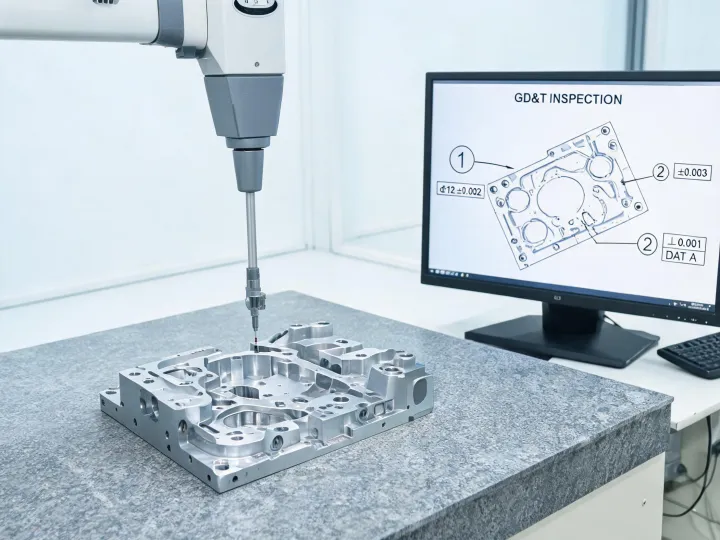
A conventional quote often hides the most important assumptions: which dimensions are hard to hold, which surfaces need special handling, which datum scheme drives inspection, and which outside processes can delay release. Dmg Mori makes those assumptions visible so buyers can choose the right balance of cost, lead time, and evidence.
Datum references, true position, flatness, profile, and concentricity requirements are converted into practical setup and measurement notes.
Machine envelope, spindle access, tool reach, and holding strategy are checked against the geometry and tolerance class.
First article expectations are tied to the planned inspection method so the report reflects the feature risk the buyer cares about.
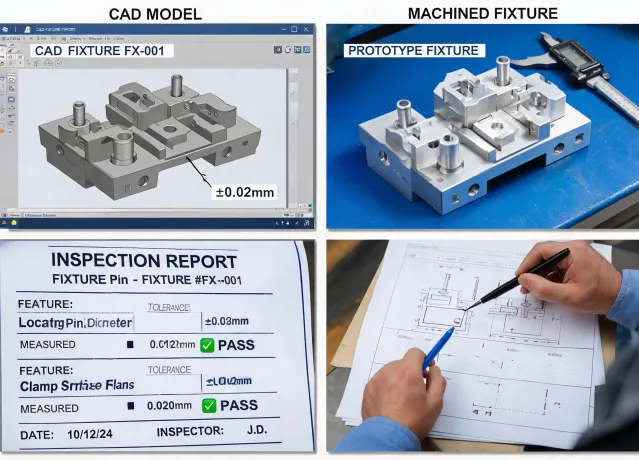
A machinery buyer needed a spindle-adjacent fixture with several tight bores and a positional tolerance tied to a hard-to-access datum. The first supplier quoted it as a basic milled block and later struggled to inspect the feature. Dmg Mori reworked the route around fixture stability, CMM access, and a controlled first article plan. The buyer received a clearer cost basis, a predictable inspection package, and a repeat route that reduced debate at receiving.

Feature indexing for first article and recurring inspection review.
Datum-based evidence for tight features and customer release records.

Heat traceability, alloy grade, and certificate capture.

Release-ready evidence for aerospace and regulated machinery programs.
For sensitive packages, the team can start with a high-level discussion and then move to NDA-first file intake before detailed models or controlled technical data are shared.
Yes. The quote can show base manufacturing scope and optional documentation tiers so the buyer sees the cost of CMM, FAI, material certs, and special-process records.
Repeat programs can preserve route assumptions, inspection frequency, packaging notes, and revision history so future orders are faster and less ambiguous.