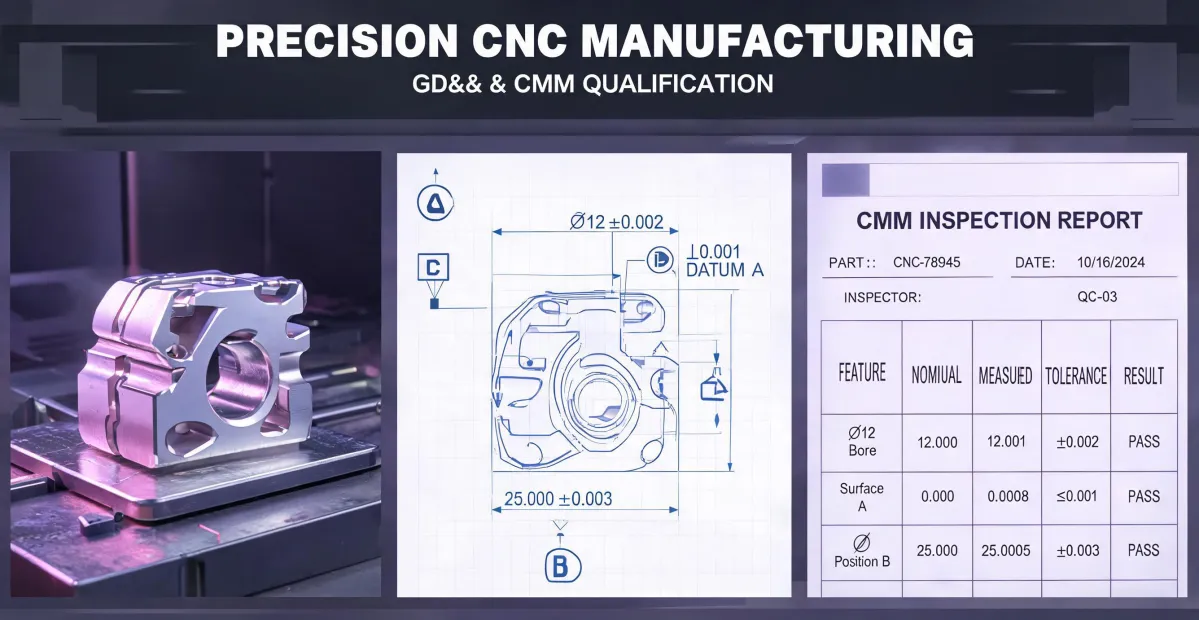
Out of 200+ first-article submissions I reviewed last year for automotive stamping dies, CNC car parts, and forging components, I rejected roughly 28%. Fewer than 5% failed on basic dimensional specs. The rest? Consistency problems, surface quality deviations, and delivery delays.
That gap tells you something important. Most suppliers can make one good part. Far fewer can make 800 identical ones—and deliver them when they promised. As a quality/brand compliance manager at an automotive components company, I've been reviewing these deliveries for about 12 years now. When someone asks me how to pick a CNC automotive supplier, my answer is always the same: choose the one you're certain will deliver on time, not the one with the lowest quote. The price difference is usually a few percentage points. A missed deadline or a rejected batch costs 10x that.
Why You Should Trust This Perspective
I work for a Tier 2 supplier that ships to Tier 1 automotive manufacturers. Every year, my team reviews somewhere between 200 and 250 deliveries—automotive mold manufacturers' output, stamped dies, CNC machined aluminum brackets, forged suspension components. The processes range from 3-axis milling to 5-axis simultaneous machining, from progressive die stamping to closed-die forging.
In 2023, our rejection rate on first deliveries was about 28%. Maybe 30%, I'd have to pull the exact number. Only a small fraction of those rejections were for parts that were completely out of tolerance. The bigger issues were batch-to-batch inconsistency, surface finish that didn't match the PPAP-approved sample, incomplete dimensional reports, and delivery dates that kept sliding.
Honestly, I've become a believer in paying for delivery certainty. That might sound odd coming from a quality person—shouldn't I care most about quality? But here's the thing: those two things are basically the same. A supplier that consistently delivers conforming parts on schedule is a supplier with a real quality system. The reverse is almost never true.
The Project That Changed How I Evaluate Suppliers
In Q1 2022, we needed a batch of CNC machined aluminum structural brackets for a new vehicle interior program. About 800 pieces. Not huge volume, but the parts were on the critical path for our prototype build.
Two suppliers quoted. Supplier A was 18% cheaper and promised 6-week delivery. Supplier B was more expensive and promised 5 weeks, with a penalty clause for late delivery built into the contract.
Procurement leaned toward Supplier A. That's normal—18% on an 800-piece run was roughly $7,000 to $8,000 in savings. Real money.
I pushed back. We'd used Supplier A twice before. Both times, delivery slipped. Both times, they didn't tell us until the day it was due. The first delay pushed our assembly line schedule by four days. The second one made us miss a customer milestone.
At the meeting, I said: "If this shipment is late again, our line downtime starts at $2,000 per hour. How many hours does that $8,000 cover?"
We went with Supplier B. Parts arrived on day 33 of the 35-day window—two days early. Zero nonconformances. The first-article inspection passed without a single deviation request.
The cheaper option might have worked out fine. But I wouldn't have known until it was too late. And "not knowing" has its own cost.
What "Cheap" Actually Costs
People tend to frame expedited fees or supplier premiums as extra spending. I see it differently. That premium doesn't buy speed—it buys certainty. Those aren't the same thing.
Speed is when you hope the supplier will be faster. Certainty is when you know they won't let you down.
One is a wish. The other is a guarantee.
Let me give you real numbers. When Supplier A's second delay hit us in late 2021, we spent about $11,000 on overtime, schedule reshuffling, and customer communication. The order itself was worth around $45,000. The delay cost us 24% of the order value.
Now compare: paying $8,000 more upfront for Supplier B would have been cheaper than that $11,000 loss—and we would have avoided the reputational hit with our customer.
So when I say cheap is expensive, I'm not being rhetorical. I'm doing math.
After that experience, we overhauled our supplier scoring. Price weight dropped from 45% to 30%. Delivery reliability weight went from 15% to 35%. On-time delivery history, documented process controls, and proactive communication protocols became scored criteria—not just checkboxes.
This wasn't a theoretical exercise. It came directly from budget lines we had to explain to finance.
What Actually Predicts Reliable Delivery
Not every expensive supplier is worth the premium. I've seen high quotes with mediocre delivery records, and mid-range quotes with near-perfect reliability. Here's what I look at now:
- Twelve months of documented on-time delivery data—not their marketing claims, but actual records. Ask for the last 12 months of OTD metrics. If they can't produce them, that tells you something.
- Raw material supply chain stability—automotive-grade tool steel, aluminum billet, and forging stock have volatile lead times. A supplier with locked-in material channels and buffer inventory is worth more than one with 20 machines and no stock strategy.
- Process control over final inspection—good suppliers control quality during machining, not by sorting good parts from bad at the end. That means documented cutting parameters, scheduled machine calibration, and traceable process records with SPC data.
- Proactive exception reporting—when something goes wrong, do they tell you immediately, or wait until the ship date to say "there's a small issue"? In our 2023 supplier audit, we made proactive exception notification a mandatory scoring item. Suppliers who passed this consistently ranked higher across all other quality metrics.
These criteria aren't complicated. They just require you to look at the supplier's actual operating behavior instead of their sales deck.
In automotive, being able to sleep at night is worth something on the balance sheet.
When the Cheaper Option Makes Sense
I have to be honest here. Not every scenario justifies paying a premium for delivery certainty.
If your timeline has plenty of buffer—say, 3 months of float—then the price advantage is real and worth taking. If the part isn't on the critical path—if a delay means rescheduling, not shutting down a line—the risk profile is different. If you're doing prototype work and the design isn't frozen yet, paying extra for delivery certainty is probably premature, because the requirements themselves are still moving.
Also, I can only speak to our context: mid-volume automotive components, 4-to-8-week lead times, and high downtime costs. If you're running small-batch custom work or you're outside the automotive sector, the math might look completely different.
One more caveat: these experiences come from 2020 through 2024. Supply chains shift, suppliers change ownership, and new manufacturing technologies keep entering the market. If you're reading this well after that window, verify current conditions before applying this framework.
After 12 years in this role, I've come to believe that quality management is really risk management in disguise. Every decision—which supplier, what spec, how much buffer—is fundamentally a bet on probability. And delivery certainty is the cheapest hedge you can buy.
This pricing and delivery data was accurate as of Q4 2024. Supplier landscapes change—verify current lead times and performance metrics directly with vendors before making sourcing decisions.