The Setup
Tuesday, 4:20 PM. A plant manager named Dave called me with that tight, controlled voice you hear when someone is trying not to panic.
"Tell me you can make 14 aluminum brackets in 72 hours," he said.
I didn't answer right away. I was doing the math in my head.
Then he explained the part that made it worse. They had a metal 3D printer. It had been down for two weeks. The board meeting was in three days. And when he tried to find a fair way to compare the options, someone typed "slides 3d printing vs cnc machining" into a search box. That search led him to us.
Dave's company makes components for aerospace and defense subcontractors. A few months earlier, they'd made a strategic bet on additive manufacturing. They bought a metal 3D printer, hired an operator at what the salary guides call a "3D printing careers salary" premium, and started designing parts around the technology.
It wasn't a bad instinct. For certain geometries, additive manufacturing is genuinely the right answer. But this order? Fourteen aluminum brackets, flight-capable, with a surface finish and tolerance the customer had spelled out in brutal detail. The plan was to print them. The printer went down. The specialist couldn't fix it. The replacement part was six weeks out.
"Redesign the parts for machining and cut them in three days," Dave said. "That's what I'm asking."
Rush Orders Are About Honesty
In my role coordinating emergency production for DMG MORI customers, I've learned that a rush order isn't just about speed. It's about honesty. You have to tell the client what's possible, what's not, and what it's going to take.
"I'm not a materials engineer," I told Dave, "so I can't speak to the metallurgy side of your print failure. What I can tell you from a production planning perspective is this: your geometry is designed for additive, and that's a problem."
I pulled up the CAD file. The brackets had internal lattice structures, organic curves, variable wall thicknesses. Beautiful design. From a CNC machining standpoint, it was a nightmare.
"You need a redesign," I said.
The silence on the other end was loud.
Here's where I have to own a mistake. I assumed their CAD file was production-ready. It wasn't. Not even close. The geometry looked like something from a topology optimization render, not a machinable part.
We had two choices. Quote a longer lead time and let them miss the deadline. Or get our applications engineer involved immediately and redesign the brackets for 5-axis CNC machining—that night.
We went with option two. Their alternative was a canceled order, a client penalty clause, and a very awkward board meeting.
The Machine That Came Through
Let me say this clearly. I'm not here to tell you that 3D printing is bad. It isn't. For the right application, it's the best tool in the shop. But when you need 14 parts in 72 hours, with tight tolerances and a specific finish, a DMG MORI 5-axis CNC machine is a different league.
The machine we used was a DMG MORI 5-axis CNC machine—the kind that's basically built for complex, high-stakes work. The B-axis table and simultaneous 5-axis interpolation let our programmer reach features that would normally require multiple setups. One clamping. Complete machining. Zero tolerance stacking.
We cut the flat blanks with precision metal laser cutting first. That part was straightforward. The 2D profiles were simple, the laser produced clean edges, and it took under an hour. The rest was 5-axis work.
Overnight, the machine ran. I checked it from my phone every 20 minutes—because that's what you do when a client's schedule is riding on a spindle—and by 5:43 AM, the first bracket came off the table. We measured it. On tolerance. We measured another one. Same result.
Honestly, watching that machine work after the scramble of the redesign? It was the calm part of the storm. The spindle didn't care about the panic. It just cut.
The "Speed" Assumption
The thing that surprised Dave most was this: he'd assumed 3D printing would be faster than machining.
That's a common assumption. When you hear "printing," you think of a document coming out of a desktop printer—fast, automated, hands-off. But metal 3D printing isn't that. It's slow, precise layering that can take days for a single part, depending on height and complexity. Then there's thermal management, powder handling, post-processing.
Does that mean additive is always slower? No. For very complex internal geometries, it can be faster than machining—if the machine is running. The key variable is reliability. Dave's machine was down. That risk is exactly what you have to plan for when you're working with a deadline.
So, bottom line? It's not 3D printing vs CNC machining in the sense of one being "better." It's about which tool fits the job, the timeline, and your risk tolerance. The slide for the board meeting should have said that from the start.
The salary math is worth mentioning too. Dave's 3D printing operator was earning a premium—the "3D printing careers salary" trend is real, and good additive talent is hard to find. But the return on that salary was zero for two weeks because the printer was dark. Meanwhile, our machine ran around the clock with one programmer and a robot tending it. I'm not saying that should drive every hiring decision. I'm saying the total cost of a technology includes downtime, not just payroll.
The Real Lesson
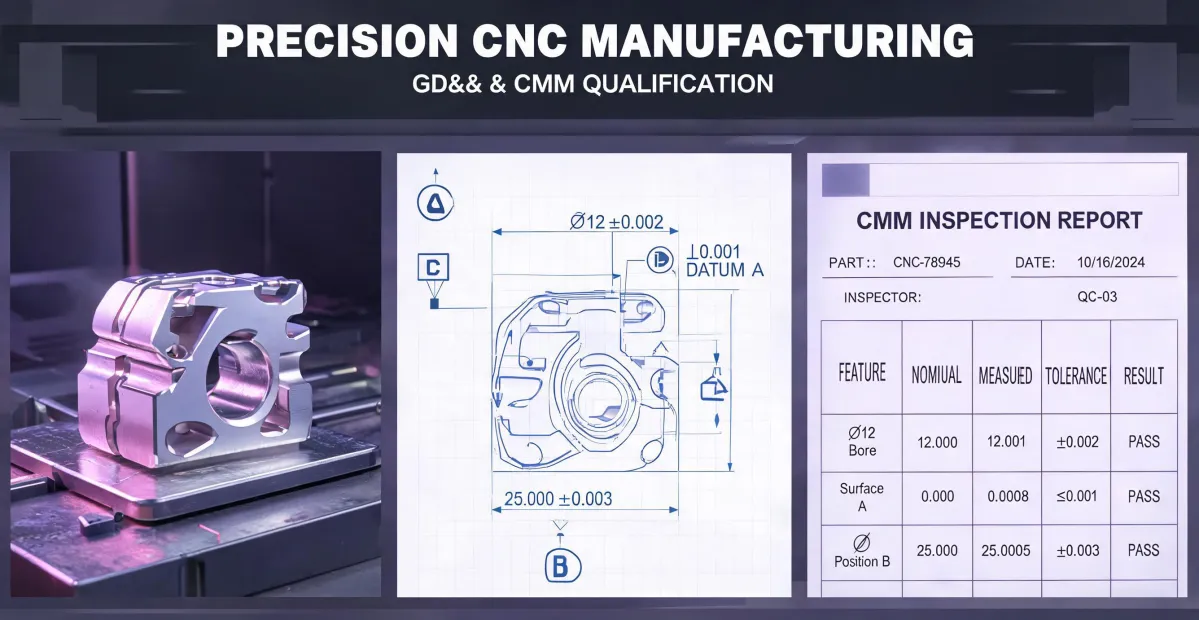
By Thursday afternoon, all 14 brackets were done. Deburred. Inspected. With quality reports. Actually, we delivered them Friday morning because Dave was still finishing his presentation and asked for a few extra hours. I was fine with that. The deadline was noon Friday, and we hit it with hours to spare.
Dave told me later that the board meeting went well. The production manager who'd championed the 3D printer gave a surprisingly honest assessment: they'd bought into the hype, skipped the risk planning, and ended up calling a machinist at the last minute. The good news? The actual parts were machined, tested, and shipped. The customer was happy. Dave looked like a hero.
That job changed how I think about additive and subtractive manufacturing. I used to see them as competing technologies—like you had to pick a side. Now I see them as complementary, but only when you account for production reality. 3D printing requires maintenance, skilled operators, and time. CNC machining requires good tooling, programming skill, and a machine that's ready to run. In a perfect world, you'd have both and use each where it fits.
For me, that's what DMG MORI manufacturing is about. It's not just a machine lineup. It's the ability to bring turning, milling, laser cutting, and automation together, and to know which one is going to save a client's week.
On that Tuesday afternoon, with 72 hours on the clock, the DMG MORI 5-axis machine was the only answer. It was there. It was calibrated. It ran, and it ran right.
"An informed customer asks better questions and makes faster decisions. I'd rather spend ten minutes explaining options than deal with mismatched expectations at 4:00 PM on a deadline."
That's the real bottom line. The parts mattered. The delivery mattered. But what stuck with me was the conversation we had before the machine ever started cutting. Dave wasn't just ordering brackets. He was learning the difference between two manufacturing worlds—and that education turned a panic call into a decision he could defend.
I'll take that over a rush fee any day.