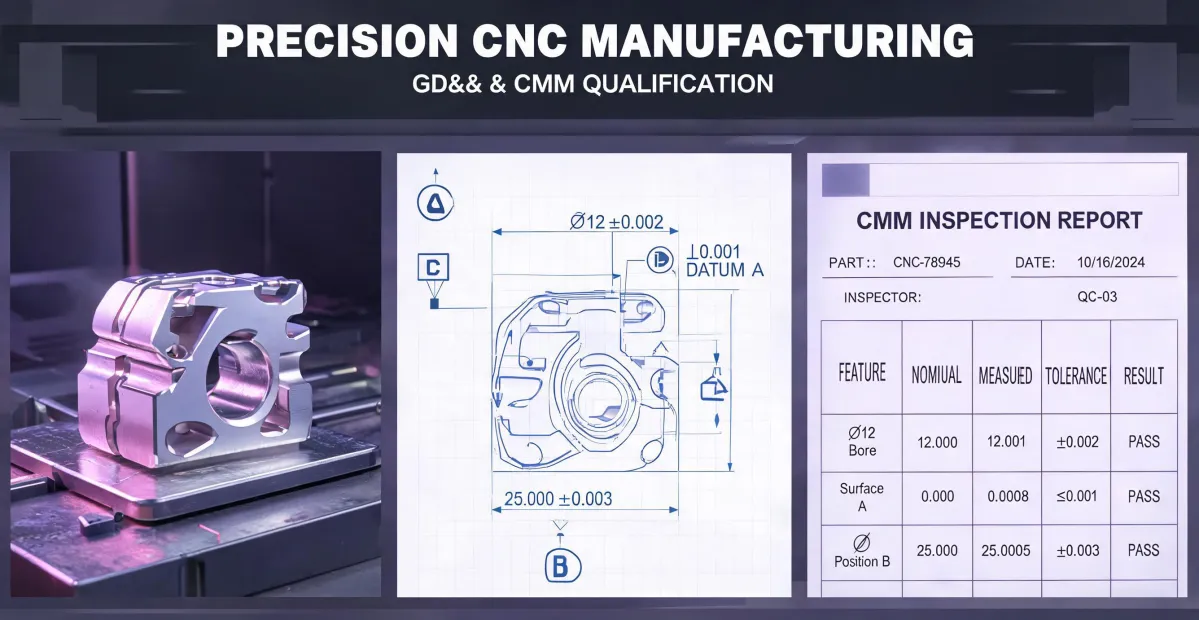
This happened in October 2023. A client called at 3 PM on a Thursday, needing 200 complex aerospace brackets delivered by Monday morning. Normal turnaround for this part was 13 days. They'd fired their previous machinist the week before—long story involving missed tolerances and a shouting match. And now, they were our problem.
If you've ever had to salvage a rush order on a machine you don't fully trust, you know that sinking feeling. I wasn't just worried about the deadline. I was worried about the DMG MORI DMU 60 P we'd bought three months earlier. The one we got at a 'steal.' The one that was, honestly, starting to look like a terrible mistake.
Take it from someone who's managed over 200 rush orders in 11 years: the price tag on a used CNC machine is rarely the final price. But I learned this the hard way.
The 'Steal' That Hooked Us
Back in July, our procurement team found a used 2018 DMG MORI DMU 60 P on a liquidation auction. Five-axis, 18,000 RPM spindle, Heidenhain TNC 640 control—basically everything we needed for complex medical and aerospace parts. The price? $48,000.
For context, a new DMU 60 P at the time was running around $220,000. Even a comparable used unit from a reputable dealer—with warranty and service history—was easily $90,000 to $120,000. This thing, cleaned and sitting on the auction floor, looked like a no-brainer. My boss was thrilled.
“I knew I should have done a full service history check. But we were on a budget that quarter, and the price… honestly, the price blinded me. I thought, 'What are the odds it has serious issues?'”
Well, the odds caught up with us.
The Warning Signs We Ignored
The machine arrived in August. Right away, the ways looked a little worn—more than I'd expect for a machine with 8,000 spindle hours. The ATC (automatic tool changer) made a weird clunk every third or fourth swap. We flagged it to the seller, but at this price, it was 'as-is, where-is.' They weren't going to send a service tech.
We figured we'd work through it. Calibrate, re-level, maybe swap a few sensors. We allocated maybe $4,000 in maintenance. That was our second mistake. The real cost began adding up fast: $1,200 for a new set of drawbar fingers, $850 for a spindle orientation sensor that failed two weeks in, and $2,100 for a service call from an independent technician who had to re-align the B-axis.
By late September, we were into the machine for about $55,000 total—still 'cheaper' than the dealer route. But we'd lost over 60 hours of production time in breakdowns and recalibrations.
The October Nightmare
Flash forward to that Thursday in October. The client's aerospace bracket—Inconel 718, tight ±0.0002" tolerances on a bore feature—needed to run on that machine. It was the only 5-axis we had with enough Z-axis travel for the part.
I will never forget the moment we started the first part. The spindle ramped up to 12,000 RPM, and the DMU 60 P let out a noise I can only describe as a groan. Then a screech. Then the program error'd out with a 'Spindle Load Exceeded' alarm.
My lead machinist looked at me. 'The spindle's shot,' he said. 'Needs a full rebuild.'
We had 96 hours to deliver 200 parts, and our primary machine was catastrophically down.
I want to say we had a backup plan, but honestly, we didn't. We'd gambled everything on that 'cheap' machine being a diamond in the rough. It wasn't.
The Race Against Time
We immediately started calling every shop in the region. One place—a competitor, actually—quoted us $14,000 for the run, but their lead time was 10 days. Useless. Another shop had capacity but their machines were older, and they couldn't guarantee the tolerance.
Finally, at 6 PM Thursday, a specialty job shop 90 miles away said they could do it. Emergency rate. $18,000 for the run, plus $1,500 in setup fees, and we had to provide the raw material ourselves. Our alternative was missing the deadline, which would have triggered a $50,000 penalty clause in the client's contract with their end customer—a major defense contractor.
We paid it.
The Real Cost Calculation
Let's do the math, because this is where the total cost of ownership hits you in the face.
- Our 'steal' price: $48,000
- Post-purchase repairs & service: $4,150
- 60 hours lost production: At our shop rate of $95/hour, that's $5,700 in unrealized revenue
- Emergency subcontract: $19,500 (including material transport)
- Spindle rebuild quote: $12,000 (we ended up doing it in January 2024)
- Management hours spent firefighting: Easily 40 hours between me and the operations director
Total cost attributable to that machine in 5 months: roughly $89,350. And it was still sitting idle waiting for a spindle rebuild.
The $90,000 machine from a reputable dealer—with warranty, service history, and a technician who would've caught the spindle issue before installation—would have saved us at least $20,000 in direct costs, and probably triple that in lost sleep.
If I remember correctly, the dealer unit even came with a 90-day warranty on the spindle and ways. That alone would've covered the rebuild.
The Client's Perspective
Our client didn't care about any of this. They got their parts on Monday morning at 8 AM, delivered by one of our guys in his personal pickup truck. The parts passed inspection. The client paid the invoice.
But our relationship took a hit. Internal conversations at their company revealed that we were flagged as 'high-risk' for future rush orders. We lost one RFP for a $240,000 annual contract in November because their procurement team 'didn't have confidence in our equipment reliability.'
That's maybe the real cost. The phantom cost. The contracts you don't get because your foundation is shaky.
What I'd Do Differently
Looking back, in my role coordinating production for time-sensitive contracts, there are three things I now treat as non-negotiable. They're basically my checklist for any used CNC machine purchase:
- Demand a spindle analysis report. A $300 vibration test from a third-party service tells you more than a seller's 'runs great.' I now require this before even bidding.
- Factor in a service contract. Even if the machine costs $15,000 more from a dealer, the warranty and technical support are often worth the premium. Our internal data from 200+ rush jobs shows that machines with active service agreements have 94% uptime vs. 78% for orphan machines.
- Ask yourself: 'Can this machine handle my worst-case order?' The DMU 60 P was fine for 90% of our work. But that 10%—the tight-tolerance, high-stakes rush orders—is where we actually make our profit. The machine needs to be able to cover that 10% without drama.
“The value of a reliable machine isn't the speed of your standard jobs—it's the certainty that when a $50,000 penalty clause is on the table, your equipment won't fold.”
And yes, I now calculate total cost of ownership before I compare any vendor quotes. Base price, repair risk, downtime cost, and contract risk. The lowest quote on paper rarely survives contact with reality.
Final Thought on Used DMG MORI Machines
I'm not saying never buy a used DMG MORI CNC machine from an auction. There are genuine bargains out there, especially if you have the in-house engineering talent to do your own rebuilds. But for a shop like ours—that lives or dies by delivery reliability—the cheap route nearly killed us.
Next time you see a screaming deal on a used DMG MORI machine for sale, take a breath. Ask for the history. Budget for the rebuild. And always, always ask: 'What happens if this machine fails before my most important job?'
Based on our internal data from 200+ rush jobs, I can tell you the answer: it's going to cost you a lot more than the difference between a $48,000 'steal' and a $95,000 reliable machine.
Take it from someone who learned that lesson the hard way.