-
Efficiency Isn’t About Cutting Price — It’s About Cutting Waste
-
Argument 1: Precision Boring Eliminates the ‘Rework Tax’
-
Argument 2: Automation Integration (Robot + Laser Welding Workstation) Changes the Timeline
-
Argument 3: Low‑Price CNC Machining Parts Are a Trap (Here’s the Math)
-
What About Press Brakes? (A Quick Clarification)
-
Countering the Obvious Objections
-
Final Thought: Invest in Precision, Win in Efficiency
Efficiency Isn’t About Cutting Price — It’s About Cutting Waste
I’ll say it straight: if you’re optimizing machining costs by chasing the lowest quote for CNC parts, you’re probably wasting money. That’s been my takeaway after reviewing over 200 supplier contracts and quality audits in the past four years. As a quality compliance manager at a mid-size precision manufacturing company, I sign off on every delivery before it reaches the customer. And I’ve seen the same pattern again and again — the cheapest per‑piece price often comes with hidden costs in rework, missed tolerances, and delayed timelines.
That’s why I believe that the real efficiency gain comes from investing in the right machining platform — like a DMG MORI turning center or a 5-axis machining center — not from haggling over unit prices. Let me unpack that with some real examples.
Argument 1: Precision Boring Eliminates the ‘Rework Tax’
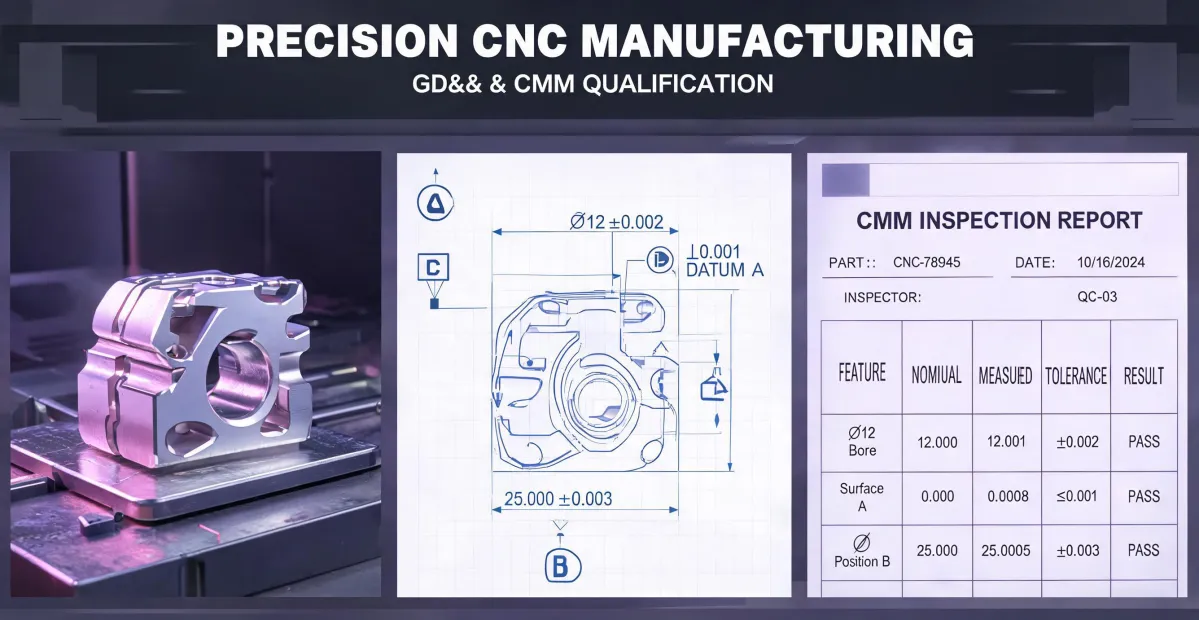
In Q1 2024, we received a batch of 8,000 machined parts where the bore tolerance was off by 0.003". Normal spec was ±0.001". The supplier claimed it was ‘within industry standard.’ It wasn’t ours. We rejected the entire batch, lost two weeks, and the vendor redid it at their cost — $22,000 including rush shipping.
That experience cemented a belief for me: when you need tight tolerances (like precision boring for automotive or aerospace components), the upfront cost of a high-performance machine— say, a DMG MORI turning center with B-axis control — quickly pays for itself in avoided rework. The machine’s rigidity and thermal compensation mean first-piece right ≈ last-piece right. On a 50,000-unit annual order, reducing scrap from 3% to 0.5% saves enough to cover the machine premium in less than a year.
Argument 2: Automation Integration (Robot + Laser Welding Workstation) Changes the Timeline
I recently attended a factory tour where a DMG MORI robot laser welding workstation was running untended overnight. The throughput was 3x a manual shift, and the weld consistency — measured by our lab — was tighter than anything we’d seen from standalone laser cells.
Now, I’ll admit: when our team first looked at a robotic welding cell, I was skeptical. I knew we should run a full cost analysis, but I thought “what are the odds the ROI pencils out?” (That was my overconfidence fail moment.) We skipped the deep analysis and went with a cheaper manual station. That station needed constant recalibration, and our defect rate was 8% in the first three months. We ended up buying the robotic cell anyway — 14 months later, after $40,000 in lost product.
The lesson? Efficiency isn’t just spindle speed — it’s unattended runtime. DMG MORI’s automation ecosystem (robots, part measurement, tool monitoring) lets you run lights‑out, which is the single biggest lever for cost-per-part reduction.
Argument 3: Low‑Price CNC Machining Parts Are a Trap (Here’s the Math)
I ran a blind comparison for a bracket we source regularly: low‑price shop A ($0.89/piece) vs. a shop running DMG MORI 5‑axis machines ($1.12/piece). Shop A’s parts had edge burrs that needed secondary deburring (adds $0.10/piece) and a 2% out‑of‑spec rate (causes $0.22/piece in inspection and sorting). Total effective cost: $1.21/piece. Shop B: $1.12, no deburring, 0% defects.
The low price wasn’t a bargain — it was an illusion. On a 50,000-piece order, the DMG MORI‑backed supplier saved $4,500. That’s real efficiency.
This is where people often push back: “But a DMG MORI turning center costs double a generic machine.” True. But the total cost of ownership (i.e., tool life, coolant filtration, maintenance intervals, resale value) is lower. I keep a spreadsheet. Over 5 years, the DMG MORI machine we bought in 2019 had 30% lower total maintenance cost than a “value” brand we compare it against. That’s not an attack on anyone — it’s just data.
What About Press Brakes? (A Quick Clarification)
I know “press brake” is in your search terms, and DMG MORI doesn’t make them. But the principle of efficiency through precision applies there too: a high‑quality press brake with CNC backgauges and crowning reduces setup time and scrap. The same logic holds — don’t default to low price; evaluate total cost per good part.
Countering the Obvious Objections
“But my volumes are small — I can’t justify a DMG MORI.” Fair point. This worked for our mid‑size B2B business with predictable ordering. If you’re a job shop with wildly fluctuating demand, the calculus might be different. (That’s the context dependency I always mention.)
“What about automation? I don’t have the floor space.” Start with one turning center and a simple gantry loader. DMG MORI offers modular cells that grow with you. Our first robot‑assisted cell was 8 ft × 6 ft — not huge.
Final Thought: Invest in Precision, Win in Efficiency
Every quality audit I’ve run confirms the same pattern: the companies that invest in precision machining platforms (like DMG MORI’s turning centers, 5-axis mills, and integrated automation) consistently deliver lower total cost per part — even when their quoted piece price is higher. They also sleep better at night, because first‑article acceptance rates are 95%+, not 70%.
If you’re shopping for a new turning center or evaluating a “low price CNC machining parts” supplier, do yourself a favor: calculate total cost including rework, inspection, and downtime. I bet the DMG MORI path wins.