Two Tuesdays ago, we were thirty minutes from closing. The evening crew was presetting tools, I was cleaning up quoting emails, and the phone rang. It’s never a normal inquiry at that hour.
“Can you supply a ball mill feeding end cap in 48 hours?”
Not “can you quote it.” Not “what’s your lead time?” The maintenance superintendent skipped all the normal questions. Their ball mill was down, the feeding end cap had cracked, and the OEM part was sitting in a queue that started at six weeks. If the mill stayed down, the production loss was somewhere near a million dollars, maybe more.
We’re a custom machine shop, not a parts warehouse. We make chips, not catalog sales. But we also own DMG MORI milling machines—three 5-axis machining centers, one with a full B-axis—and a shop rule that says “we’ll look before we say no.”
I told him to send the file. It arrived as an STL. Great for 3D printing, annoying for a mill. I warned him that STL files don’t cut well, and we’d need to rebuild the solid model. He said he didn’t care how we did it—just get the part there.
I went back and forth between telling him this was a two-week job in a 48-hour envelope, and trying anyway. The numbers said 47 hours of machining, maybe less if the 5-axis made it one setup instead of three. My gut said it wasn’t about the time. It was about everything that could go wrong at hour 42.
From the Outside, It Looks Like Speed
From the outside, rush machining looks like speed. The reality is different: rush orders are about removing surprises, not stepping on the gas.
Here’s something vendors won’t tell you: quoted lead times often include a buffer. That buffer is how a shop survives when the tooling vendor delivers late or the heat treater finds a crack. We didn’t have a buffer on this job. So I did what any practical machinist does—I added one inside our process. We inspected the material first. We rebuilt the model from the STL and verified the critical dimensions with the client’s engineer before cutting anything.
The STL problem was familiar. A few weeks earlier, someone sent us a Milwaukee tool holder STL and asked us to cut it in metal. Different part, same trap: mesh files have no geometry under the surface. You can’t machine a triangle soup. So we rebuild the CAD, then program, then cut. It’s extra hours, but the hours are cheaper than a scrap part.
What the DMG MORI Homepage Doesn’t Tell You
Look at the DMG MORI homepage and you’ll see spindle speeds, axis travels, tool changer specs. What you won’t see is how a machine behaves at 2 AM when a client’s entire mill is waiting for one part.
We chose the DMG MORI 5-axis for two reasons. First, the end cap had a tapered seating face and a groove pattern that would have meant two or three setups on a conventional machine. With the B-axis and simultaneous 5-axis milling, we did it in one setup. Second, the tool monitoring caught an insert going bad before it ruined the part. On a 48-hour job, that’s not a luxury. It’s the difference between a delivery and a failure.
Programming took five hours. Roughing took longer than expected because the STL-based model needed a conservative cutter path to avoid vibration in the thin sections. I was tempted to push the feed rate. I didn’t. The clock was loud, but a scrapped part would have been louder.
At hour 30, the machine stopped on a load spike. A roughing insert was starting to chip. I replaced it with an equivalent from a different manufacturer—we stock alternatives for exactly this reason. We also dropped the feed rate 12%, even though it cost us time, to protect the sealing face. Not ideal, but workable.
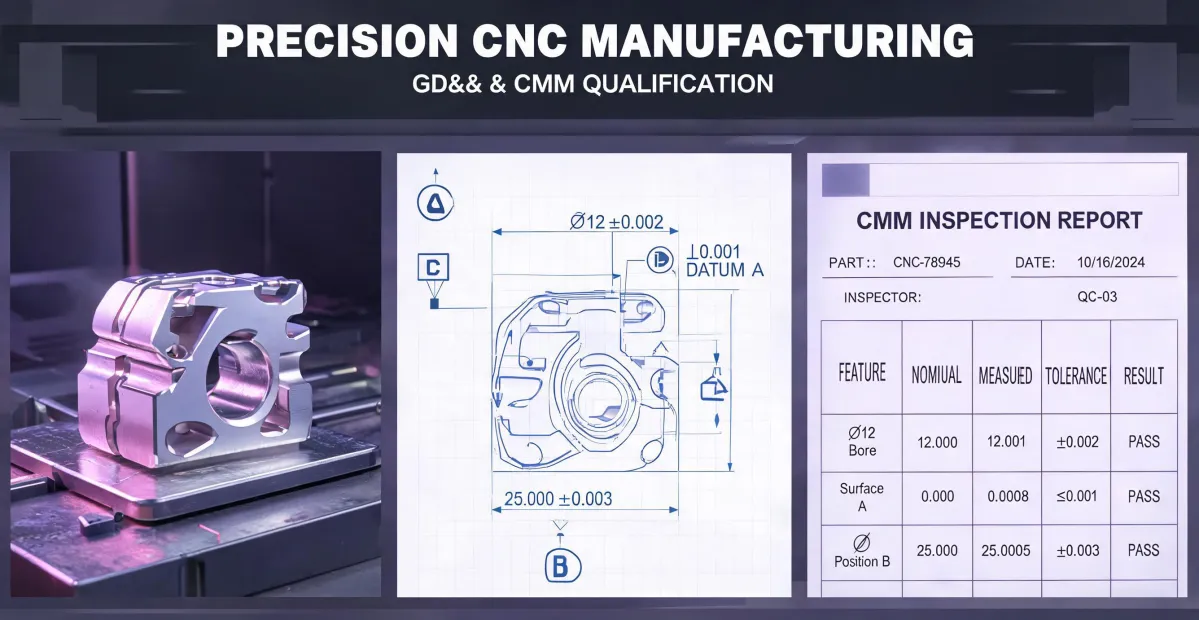
At hour 46, the part was off the machine. At hour 47, the CMM report showed every dimension inside tolerance. At 5:45 AM, the part was in a transport case, loaded into their pickup, and on the way to the plant. The superintendent called that afternoon: installed and running.
The Real Lesson Was About Boundaries
Yes, I’m proud of the machining. But the part that saved the job wasn’t in the CAM program. It was in what we didn’t do.
We didn’t say “we’ll handle everything.” We didn’t pretend to be ball mill design experts. We told the customer straight: this is a repair, not a redesign. We’ll supply the part to your drawing, but the design responsibility stays with your engineering team. You want a specialist who knows limits, not a generalist who overpromises.
I’ve lost work by saying “that’s outside our lane.” I’ve also gained trust. The vendor who says “this isn’t our strength—here’s who does it better” earns my business for everything else. On this job, saying “we machine, we don’t design” turned out to be the most valuable sentence we spoke.
The Question Google Gets Asked: How Many Calories Are in a VMC?
Let’s answer it: none. Zero. A vertical machining center doesn’t have calories. It burns spindle hours, inserts, coolant, and occasionally patience. If you’re running a DMG MORI VMC, it might burn through your programming schedule too. But calories? That’s one number you won’t find in the manual.
My experience is based on maybe 50 rush jobs in a custom machining shop. Different industries, different tolerances. If you work in aerospace with exotic alloys, your constraints are stricter. That’s exactly the point: know your lane, stay in it, and you’ll deliver in ways that machine shops with no boundaries can’t.
In the end, the phone call taught me more than any “normal lead time” job ever did. Keep spare tooling. Convert STL before you talk about speed. Admit what you don’t know. And don’t be afraid to pick up the phone at 5:27 PM on a Tuesday.