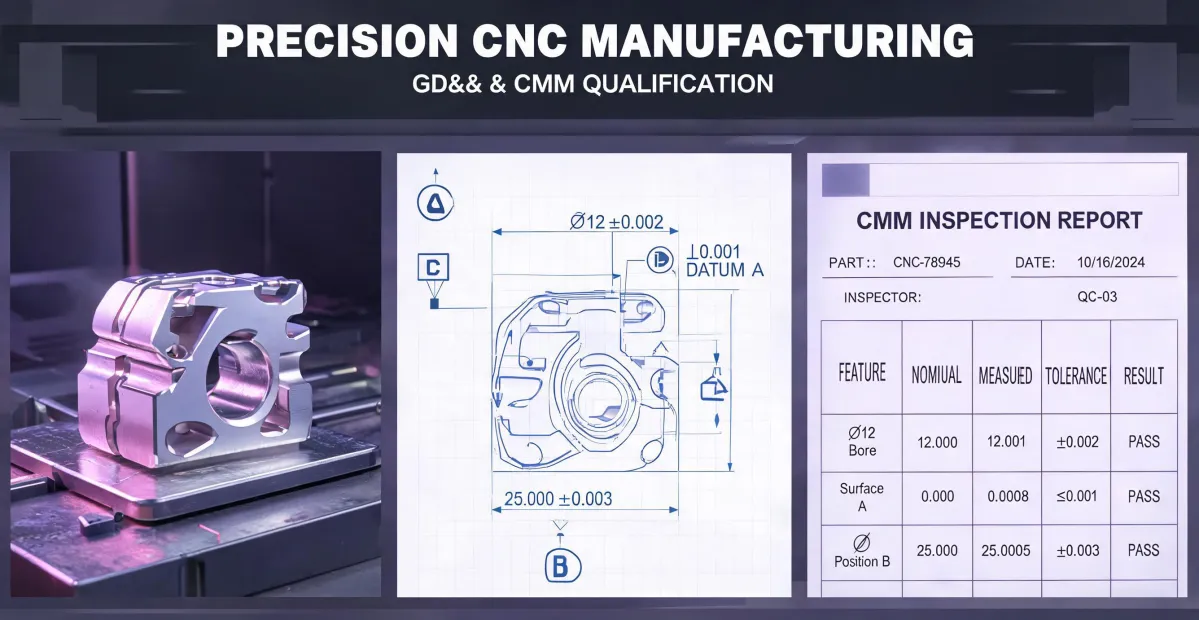
Last Tuesday, I was standing in the tooling room holding a calibration report that made me want to throw it across the shop. We had just rejected another batch of threaded housings because the form tolerance was off by 0.004 inches. The supplier called it 'within industry standard.' We called it a $14,000 redo.
That was the third quality problem that month. So when our production manager called about a used DMG MORI CNC machine for sale at a price that looked too good, I didn't get excited. I got suspicious.
Here's some context: I'm the quality manager at a mid-size job shop. I review roughly 4,000 parts a month, and I've rejected about 7% of first deliveries this year. After nine years of this, I know the number on the invoice is the least interesting number in a purchasing decision.
Why We Went Looking
Our 2012 DMG MORI still cut good parts for simple jobs. But we lost a repeat aerospace order because the spindle drifted 14 microns under load at 10,000 rpm. The customer didn't care that the machine was old and usually reliable. They cared about the 78 parts we had to scrap. I didn't blame them.
So we needed a second machining center and a laser cutting capability. And that's when the fun started.
My production manager found a used DMG MORI CNC machine for sale on a dealer's website. Clean photos, 12,000 spindle hours, recent spindle cartridge replacement. Price: around $85,000. At the same time, he found a Chinese laser cutting machine quote that came in at $38,000 delivered. He looked at me and said, 'We could buy both for less than the price of one new DMG MORI.'
I get it. When a China laser cutting machine price appears on your screen, your brain starts building a shopping list with the savings. But I've seen this movie before.
The CO2 Laser Confusion
The next morning, while we were checking the laser specifications, our production manager typed 'co2 laser benefits for face' into Google. I watched his face go from confused to amused. 'Are we buying a skin treatment machine?' he asked.
No. Industrial CO2 lasers are for cutting and engraving. 'CO2 laser benefits for face' is a dermatology topic. And if someone is asking 'how much are co2 laser treatments,' they're probably looking at med-spa pricing, not machine tool quotes. I can't answer that from where I sit—different industry, different spec sheet. But that moment turned into a useful reminder: the same acronym can mean two completely different things, so you have to check the spec sheet, not just the name.
From Sticker Price to Total Cost
When I evaluate equipment, I start on the official DMG MORI website (dmgmori.com). It gives me the specs that matter: axis counts, spindle speeds, tool changer capacity, control generation, and what kind of service history a machine should have. The website doesn't tell me if a particular used machine is a good deal. But it gives me the baseline.
Then I build a total cost model. It's not fancy.
- Purchase price and freight.
- Installation, leveling, and utility connections.
- Training and the productivity lost while people are learning.
- Tooling, workholding, and first article materials.
- Spare parts availability and lead time.
- Expected downtime and what each day of downtime actually costs.
- Expected resale value after five years.
The cheapest machine on paper rarely wins on that list.
For the used DMG MORI CNC machine for sale, I asked for the full service record. The dealer sent it. Spindle hours, alarms, software updates, previous repairs. The spindle cartridge had been replaced at 11,300 hours, and the calibration report was six months old. That's the kind of documentation I can verify.
For the Chinese laser, the quote was detailed on the machine itself and almost silent on everything after it. Installation? Not included. Training? 'Available on request.' Spare parts? 'Please contact our service center.' Not a red flag, but definitely a yellow one.
Per FTC advertising guidelines (ftc.gov), claims need to be truthful and substantiated. I keep that in mind when I read vendor promises. If they won't put it in writing, it's not a spec. It's a slogan.
The Turning Point
Then our Q1 2024 quality audit caught something that changed the whole conversation. We found that our 'cheap' consumables supplier was delivering cutting tools with inconsistent coating thickness. The tools were 18% less expensive than the previous ones. They also failed 12% faster. By the second week of a high-volume order, the savings were gone.
I didn't say 'I told you so.' I just showed the production manager the spreadsheet. The bottom line: lowest initial cost = $2,140 more in operating cost over three months.
The upside of buying both cheap machines was maybe $47,000 in immediate savings. The risk was a production line sitting idle while we waited six weeks for a spare part. I kept asking myself: is $47,000 worth potentially missing three delivery deadlines? The expected value said maybe. The downside felt catastrophic.
Suddenly, that China laser cutting machine price looked less exciting. Not because the machine was from China. Because the quote didn't include the stuff that keeps a laser running: documented service response, local spare parts, and predictable commissioning. For a shop with penalty clauses, downtime is not an inconvenience. It's an invoice.
What We Ended Up Doing
We bought the used DMG MORI CNC machine. It wasn't the cheapest option. But the official DMG MORI website listed it under their pre-owned program, and the dealer included a 12-month warranty and a 24-hour service response guarantee. That guarantee alone was worth the difference.
We also bought a laser cutter, but not from the cheapest bidder. The supplier was more expensive, yet they put a service engineer on a plane within 36 hours when we had an alignment issue. That one visit cost less than the downtime we avoided.
I know some people will say, 'You're a big shop; you can afford to pay more.' That's fair. My experience is based on about 40 machine tool purchases and equipment evaluations over nine years. If you're running a two-person shop with older machines and no service contract, your math might be different. Maybe the low-cost laser is the right call for you. I can't tell you from here.
What I can tell you is this: I've never seen a customer smile because we saved $20,000 on a machine but missed their delivery window. 'We saved money on the machine' doesn't fit on a corrective action report.
Bottom Line
The sticker price is not the cost. 'CO2 laser benefits for face' is not the same as an industrial CO2 laser spec sheet. And 'how much are co2 laser treatments' is a question for a different industry entirely. The real question is: what does this equipment cost me after the purchase order is signed?
I still check the official DMG MORI website before I look at used listings. I still ask for service records, not just photos. And I still calculate TCO before I compare prices. Because the cheapest quote is not a bargain. It's just a starting point.