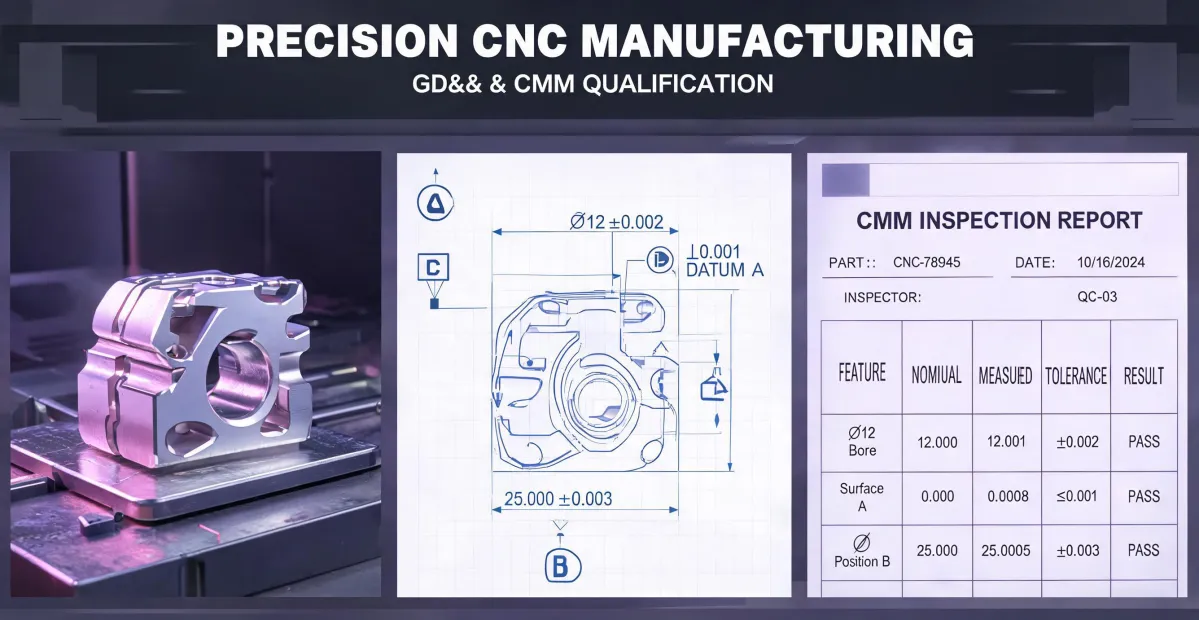
Last October, I stood in front of our DMG MORI DMU 50 holding a broken HRC50 end mill. The coolant line was warm. The part in the vise was a hardened steel fixture block for an Apollo handlebar order, and we were already a day behind schedule.
I didn't break it by accident. I broke it because I assumed something I should have looked up.
The Job Started With a Quote
I'm the procurement manager at a 45-person contract machining shop. I've managed our tooling and service budget for 6 years—roughly $1.4 million a year in spend—and negotiated with more than 40 vendors. My first rule is total cost of ownership, not the lowest quote. But this job caught me on a bad assumption.
The customer needed 20 machined components for a prototype Apollo handlebar assembly. The material was pre-hardened tool steel at 50 HRC. That meant we needed an end mill rated for at least 50 HRC. We ordered a premium HRC50 end mill from a local distributor. The price was painful, but I approved it because the finish spec was tight.
What I didn't approve was a coolant chiller check. I assumed the machine's coolant temperature was a maintenance detail. It felt fine. The pump worked. The tank had liquid. I moved on.
The Day the End Mill Broke
The first three parts ran, but the finish looked rough. Then the end mill snapped on the fourth pass. It wasn't a chip overload. It wasn't a feed issue. The machine was fine. I checked the speed, the feed, and the tool holder. Everything matched the program.
The one thing I hadn't checked was the coolant temperature.
Actually, that's not true. I didn't even know it was a variable. When I first started managing this shop's machining budget, I assumed that the fluid in the tank just needed to be there. As long as it flowed, it was doing its job.
I was wrong.
What the DMG MORI Official Website Taught Me
After the second end mill broke, I finally pulled up the DMG MORI official website. I typed 'dmg mori cnc cutting lubrication temperature' into their search field and found a coolant guide for hard milling. The page said that for alloy steel above 50 HRC, an oil-based coolant should stay roughly between 18°C and 23°C. Above that range, the viscosity drops and the lubricating film at the cutting edge starts to break down. Below that range, thermal shock can crack the tool.
The real answer was basically a viscosity story. I wrote down 18-23°C. Maybe the exact page quoted a narrower window; I'd have to check my notes. But the takeaway was clear: coolant temperature is not a maintenance detail. It's a process parameter.
I checked our chiller. It was set to 31°C. The gauge was broken, too. It showed 26°C while the real temp was 31°C—we only found out because our portable thermometer agreed with the thermal camera. Oh, and the flow meter looked fine, but the actual coolant in the tank was warm enough to feel through the sight glass.
We set the chiller to 21°C and ran the next part. The improvement was immediate. The same HRC50 end mill that had lasted 25 minutes on the previous setup lasted about 2 hours on the next one. Maybe 1.5, I'd have to check the tool log. Either way, the difference was huge.
When I compared the two runs side by side in my cost log, the only significant variable was the coolant temperature. Same machine. Same HRC50 end mill. Same speeds and feeds. Different temperature. That comparison made me realize why the official specification sheet exists.
I accessed that DMG MORI official website page in October 2024, and I checked again in February 2025 before writing this. The same general guidance was still there. I'm not going to quote coolant pressure or concentration percentages because I don't want to misquote what I saw for our specific machine. The point is that the answer was free and official.
The VMC Chinese Parts Experiment
At the same time, I was trying to save money on the Apollo handlebar fixture itself. One of our operators needed replacement soft jaws for the older vertical machining center, and the drawing referenced the Apollo handlebar prototype. I did what any cost controller would do: I searched for 'vmc chinese parts apollo handlebar' on a sourcing marketplace.
The quote looked great. It was about 40% lower than the local option, and the seller had good ratings. I ordered it. When the parts arrived, the bolt pattern was off by about 0.12 mm. That's not a lot, but on a hardened fixture jaw, it's enough to let the handlebar shift during a climb cut.
We spent two hours re-drilling and ended up scrapping one jaw. The 'cheap' parts cost us more than the local quote once I added operator time and the wasted setup. I should have added inspection and a test cut to the purchase order. The seller wasn't necessarily dishonest—the parts were just made to a looser standard than our drawing needed.
Here's something vendors won't tell you: the first quote for replacement machine parts doesn't include the cost of verification. Whether it's a Chinese VMC spare or a domestic one, if the tolerance matters, you need a CMM check and a test cut. Otherwise the quote is fiction.
Spaghetti Isn't Random
The same week, one of our engineers was printing a locator arm on the office FDM printer. It came out looking like a plate of noodles. He showed me the machine and asked, 'what causes spaghetti in 3d printing?'
I honestly didn't know. We looked it up together. The most common cause was the first layer not sticking to the build plate. The nozzle was too far away, so the filament curled up, caught on the nozzle, and kept extruding into a messy pile. It wasn't the material. It wasn't the model. It was the starting condition.
That hit me the same way the coolant temperature did. The first layer is like the cutting edge. If the contact condition is wrong, you don't get a second chance. The machine will keep moving and keep printing, but the output is scrap.
What I'd Do Differently
My experience is based on one used DMU 50, one 45-person shop, and about 30 hard-milling jobs over 6 years. If you're running a different coolant chemistry or a new machine with high-pressure through-spindle coolant, your numbers may be different. The lesson isn't the number. The lesson is to check the official spec before you blame the tool.
The efficiency win wasn't a cheaper end mill or a 3D printer upgrade. It was the decision to stop guessing and start using the documentation that was already available. The DMG MORI official website, the material spec, the coolant guide—they're all free. My old process of 'set it and forget it' was the expensive part.
Bottom line:
- Check the DMG MORI official website before you trust a random forum post.
- DMG MORI CNC cutting lubrication temperature is a real process variable. Measure it.
- A premium HRC50 end mill can't fix a coolant chiller that's 10°C off.
- 'vmc chinese parts apollo handlebar' is okay as a search—just add 'with inspection report' before you order.
- And if someone asks you what causes spaghetti in 3D printing, look at the first layer first.
That broken end mill ended up being the cheapest lesson I've had as a procurement manager. It didn't cost me a client. It cost me a tool, a day, and a rule that I still use today: total cost includes every variable you're too busy to check.