-
Step 1. Write Down Three Volume Numbers Before You Talk to Anyone
-
Step 2. Know What a Home 3D Printer Can Prove
-
Step 3. Put the Drawing, Material, and Required Inspection in the PO
-
Step 4. Compare a Machining Center Purchase Against an Outside Partner
-
Step 5. Qualify CNC Milling High Volume Manufacturing Partners on the Floor
-
Step 6. Pilot a Small Lot and Watch How the Supplier Behaves
-
Mistakes That Cost Me Time, and What I Do Now
I am the office administrator for a 30-person product company. Since taking over purchasing in 2020, I have managed roughly $500,000 in outsourced machining orders each year across nine vendors. I report to operations and finance, not to manufacturing. My main job is to make sure parts arrive correct, documented, and on budget. I am not a machinist by training. That is exactly why I wrote this checklist.
Keep it handy when you need to decide between a home 3D printer, an outside machining partner, or a DMG MORI machining center. It has six steps.
Step 1. Write Down Three Volume Numbers Before You Talk to Anyone
Every project starts as a request: 'we need to make some parts.' My first question is no longer about material. It is about volume.
Three numbers matter: number of prototypes, number of pilot pieces, and expected first-year volume. Put them in an email before you discuss process or suppliers. A part that is made 50 times is not a reason to buy a DMG MORI machining center. The same part with repeat orders in thousands may be.
I lost that discipline in 2021. We spent two weeks evaluating outside CNC capacity based on a forecast of 400 units, and actual demand turned into 12,000 units within a year. The shop we selected handled it, but only because we asked the next questions in the right order. Since 2022, the volume list comes first.
Step 2. Know What a Home 3D Printer Can Prove
Desktop 3D printing is useful for shape, fit, and design review. Fused deposition modeling (FDM) is the most common type of home 3D printers. It is inexpensive, easy to run, and fine for making a plastic model in a few hours. It does not, however, act as a substitute for machined metal.
I hear the question a lot: 'are enclosed 3D printers better?' For ABS, nylon, and polycarbonate, the answer is yes. An enclosure keeps the chamber temperature steady, reduces drafts, and lowers the risk of warping. If you only print PLA for visual parts, an open-frame printer may be enough. But a more stable 3D printer still makes a layered plastic part. It cannot show what happens when an end mill meets aluminum, whether a pocket is reachable with tooling, or whether a critical dimension can hold plus/minus 0.01 mm on a machining center.
Use a prototype to answer the right question. If the question is 'does it fit?' 3D printing works. If the question is 'can we manufacture it at volume in this material?' the question is for a CNC partner.
Step 3. Put the Drawing, Material, and Required Inspection in the PO
In 2023, we sent a CAD model to a new vendor and said 'tight tolerance' in the phone call. The vendor machined a slot at plus/minus 0.05 mm. Our designer had expected plus/minus 0.01 mm. The parts failed incoming inspection. The PO did not include the drawing or tolerance, so we ended up paying for part of the rework and lost about three weeks. The total cost was close to $3,000.
Now the order package contains three things: the latest drawing revision, a note that the drawing controls if there is a conflict with the model, and a requirement for a first-article report. If you are an office buyer like me, you do not need to know how to read every geometric tolerance. You need to make sure the drawing is contractual.
Step 4. Compare a Machining Center Purchase Against an Outside Partner
When a part survives the prototype phase, someone on the team will ask why we do not buy our own machine.
We went through this calculation in 2024. The part starts as round bar stock and needs cross holes and a milled slot. A DMG MORI turning center with driven tools would do the turning and the milling in one clamping, which reduces handling and protects concentricity. The second part is a housing that would fit nicely on a five-axis DMG MORI machining center. Both were excellent candidates.
Finance stopped the purchase when we looked at utilization. Best case: in-house cost per part drops by more than half. Worst case: the machine runs at 25 percent utilization and we absorb depreciation, tooling, floor space, operator training, and programming time. I kept asking whether the best case justified the worst case. In 2024, it did not.
We outsourced. Even after signing, I second-guessed the decision until the first two deliveries arrived on time with inspection data. The lesson is not that the machine was wrong. The trigger was wrong. We now review rolling forecasts every quarter, and if the volume crosses our threshold, the same DMG MORI turning center goes back on the capital request.
Step 5. Qualify CNC Milling High Volume Manufacturing Partners on the Floor
If you decide to outsource, do not pick from a list of quotes. Visit the floor or do a video walk-through.
When we evaluate CNC milling high volume manufacturing partners, I ask four questions:
- Which machine will actually run our part?
- How is workholding planned?
- How do they measure critical dimensions during the run?
- Can we see a sample first-article report with the customer name removed?
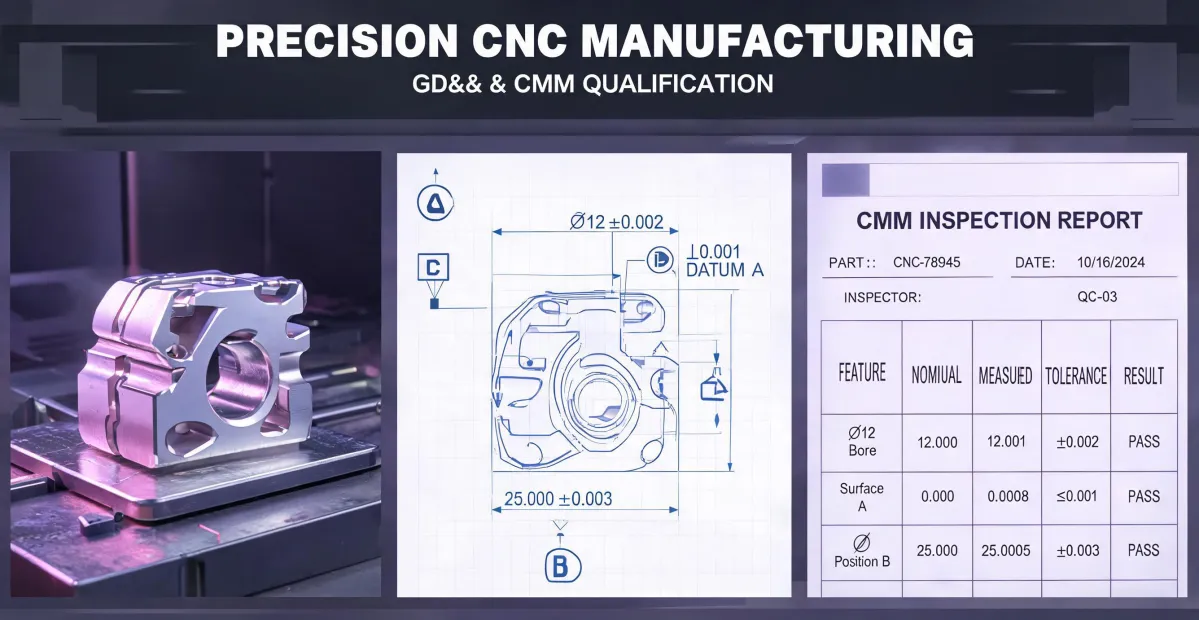
A DMG MORI machining center on the floor tells me the shop invests in good equipment and can often machine five-sided work in one setup. That reduces tolerance stack-up and re-fixturing. But the machine matters less than the process around it. I have seen good equipment run with weak inspection and strong equipment run badly because of poor programming. Audit the people, the probes, and the paperwork as closely as the brand.
The turning side follows the same logic. For a round part with additional milling, a DMG MORI turning center with driven tools is a meaningful advantage because more features finish in the same clamping. It is only an advantage if the shop can prove it with a first article.
Step 6. Pilot a Small Lot and Watch How the Supplier Behaves
We do not jump from quote to full volume. We order 20 pieces first, sometimes 25. The pilot order costs more per part than the full run, and that is acceptable. It is the price of a test.
What matters is not only whether the pilot parts pass. I watch how the supplier treats the small order. Do they ask clarifying questions? Do they email a proper order confirmation? Do they send the first-article report without being chased? Every one of those behaviors will be multiplied at full volume.
Small doesn't mean unimportant. It means potential.
A vendor that treats a 20-piece pilot seriously will probably treat a 2,000-piece order even more seriously. The vendor that ignores a small quote is telling you exactly what your production experience will be.
Then comes the operational test. During our 2024 vendor consolidation, one supplier made good parts but could not issue an invoice that matched the PO. Finance rejected $2,400 in expenses, and the official quote never showed that cost. I should add that the shop floor was excellent; the paperwork is what ended the relationship.
Mistakes That Cost Me Time, and What I Do Now
Three mistakes stand out from the last few years:
- Buying a 3D printer before defining the project. Use prototypes to test design, not to simulate machining.
- Comparing unit prices before comparing volumes and specifications. The cheapest high-volume partner becomes expensive when the spec changes.
- Thinking about a machining center as a way to save money instead of as a capacity decision. The machine pays off only when the future work is real.
The right sequence is: volume, prototype method, specification, make-or-buy, floor audit, pilot lot. This checklist sits on my desk with coffee stains on it. I still work through it before I say yes to a purchase.