First, Stop Looking for a Universal Answer
I've been handling machining orders for 11 years. I've personally made and documented 31 significant mistakes, totaling roughly $47,000 in wasted budget. That's not a flex. That's why I've become the person who keeps a checklist and answers equipment questions with 'it depends.'
The question 'should I invest in a DMG MORI lathe or a Veho-1000 direct drive 3d printer?' gets asked a lot. It's the wrong question. There are three scenarios I see all the time, and each one leads to a different answer.
- Scenario A: You're making production metal parts with tolerances you need to trust.
- Scenario B: You need fast, low-cost iterations for prototypes or fixtures.
- Scenario C: You're putting a printer in a room where people breathe.
Scenario A: You Need Metal Parts That Are Actually Repeatable
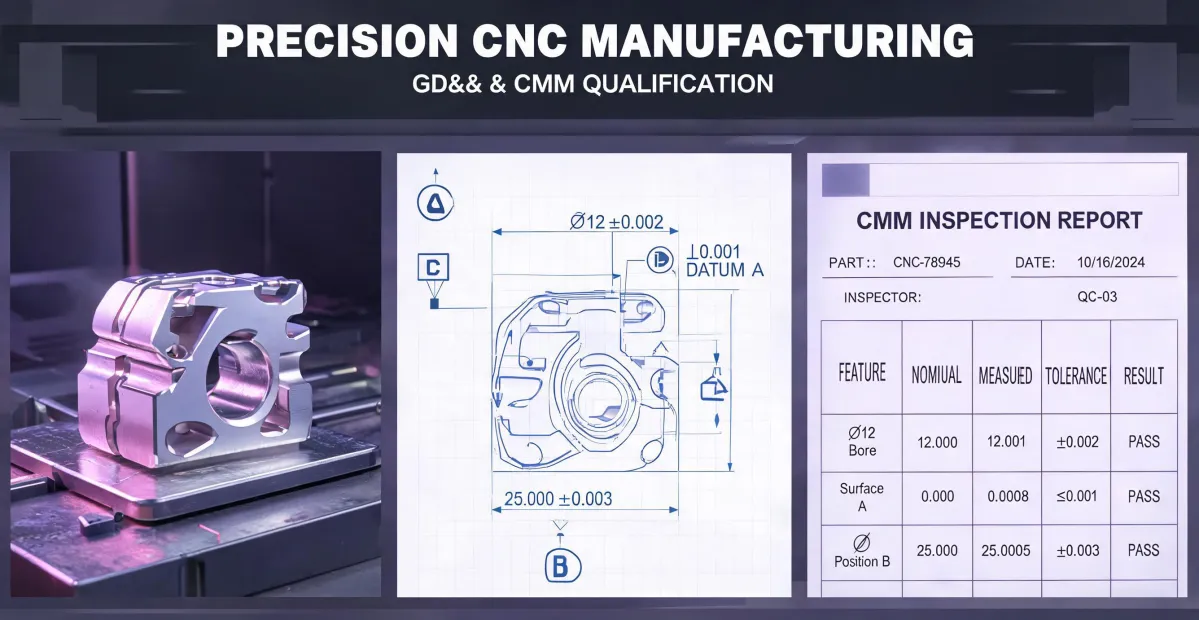
If your part is made of steel, aluminum, or anything that has to survive in a mechanical assembly, a desktop 3D printer isn't a replacement. That's not a dig at 3D printing. It's a materials conversation. For production quantities, I usually start with a CNC DMG MORI lathe or a machining center. The first CNC DMG MORI lathe I programmed was for a small batch of sleeves with a tight bore requirement. The machine held tolerances part after part. (Sounds like a brochure, I know. It's also true.)
But the machine is only half of the system. Here's where I've lost real money.
On a 140-piece order in 2022, I approved the setup without checking the runout on the 4 flute ball nose end mill. It looked fine on my screen. Every part came off with a 0.02 mm inconsistency on the contoured surface. 140 parts, roughly $3,200 in material and labor, straight to the scrap bin. The mistake wasn't the tool itself. The mistake was skipping the verification step.
A 4 flute ball nose end mill is a good choice for finishing complex contours in hardened material. The extra flutes can give you a better surface finish, but only if the tool path and runout are controlled. If you're roughing aluminum, a 2-flute or 3-flute tool may clear chips better. There is no universal end mill. There is only the right tool for the cut and the discipline to test it.
Five minutes of checking runout would have caught the problem. Instead, I spent five days reworking the schedule. Prevention really is cheaper than correction.
If you're buying a lathe, set aside budget for tool holders, probing, and a test part. A machine with no good tooling system is like a race car with cheap tires. It will move, but it won't handle.
Scenario B: You Need Prototypes, Not Production
Now for the other side. When I need to show a customer a bracket concept or check an interface fit, I don't want to burn machine time on a one-off. That's when a desktop printer enters the picture.
The Veho-1000 direct drive 3d printer is a good example of a machine that can pay for itself quickly if you use it for the right reason. Direct drive is useful for flexible filaments and gives you more consistent retraction. But the surprise isn't the printer itself. The surprise is how much of the process depends on preparation.
My first print that actually worked for an assembly check made me realize something: I had designed it as if it were a machined part. The printed bracket had sharp internal corners and thin walls in exactly the wrong places. It looked okay, but it was weak where the layer lines had to bridge a gap. In machining, you remove material. In printing, you add it in layers. Those are not the same design process.
For a Veho-1000 direct drive 3d printer, my pre-flight checklist includes filament dryness, bed level, first layer height, and part orientation. Skipping any one of those can cost you eight hours of print time, which is just as wasteful as a bad CNC setup.
If you're thinking about metal additive manufacturing, that's a different category. DMG MORI also makes Lasertec machines for powder-bed fusion, and those are serious production tools. But the decision to buy one is based on qualified processes and certified materials, not just the desire to try something new. A desktop plastic printer is for learning and iterating. A production metal additive machine is for real parts with real quality requirements.
Scenario C: Does a 3D Printer Make You Sick? Let's Be Honest
I get this question a lot: does 3d printers cause disease? It sounds like a weird search query, but it deserves a straight answer.
I'm not an epidemiologist. I'm a machinist who reads hazard data because I've been burned. NIOSH has published guidance on 3D printer emissions; as of 2024, it still recommends controlling exposure with ventilation and low-emission settings. Fused filament printers can emit ultrafine particles and volatile organic compounds. The amount depends on the filament, the nozzle temperature, the enclosure, and the room's ventilation. ABS tends to produce more emissions than PLA. 'More' doesn't mean PLA is zero.
I used an ABS spool in a small office once. People warned me. I didn't listen. After three days of printing, I had a headache and a scratchy throat. The printer didn't give me a diagnosed disease. I'm never going to claim that. But the exposure was real, and it was preventable.
So here's the practical answer to 'does 3d printers cause disease?': A printer itself doesn't guarantee a disease. Long-term exposure to high particle concentrations is a known respiratory concern, and the responsible move is to control the air. Put the printer in a ventilated area, use an enclosure or exhaust, and choose lower-emission filaments when possible.
In a professional shop, I treat printer emissions the same way I treat coolant mist. You don't wait for symptoms. You contain the source and clean the air. Your checklist should include ventilation before the first layer, not after the third spool.
How Do You Know Which Scenario You're In?
This is the part most guides skip. They give you one answer and pretend it fits everyone. My method is simpler.
- What is the part made of, and how tight is the tolerance? If it's a production metal part with a bore tolerance in tenths, you're in Scenario A. A 3D printer won't get there.
- How many do you need, and how fast? One prototype for a fit check can go to a Veho-1000 direct drive 3d printer. 300 pieces due on Friday need a real machining process.
- Who is breathing the air? If anyone sits near the printer for hours, you're in Scenario C before you're in anything else. Solve the ventilation problem first.
I've caught 47 potential errors with my checklist in the past 18 months. Most of them were caught in the setup phase, not after the parts came off the machine. That's the whole idea: catch the problem when it's still cheap.
Before you approve any machine, tooling, or filament purchase, test it. A test piece is not wasted time. A test piece is the cheapest insurance you'll ever buy. In my case, a $300 test cut could have saved a $3,200 order. And a $20 air quality check could have saved a very bad week.
There is no single right machine. There is only the right scenario for what you need, and the discipline to check before you commit.