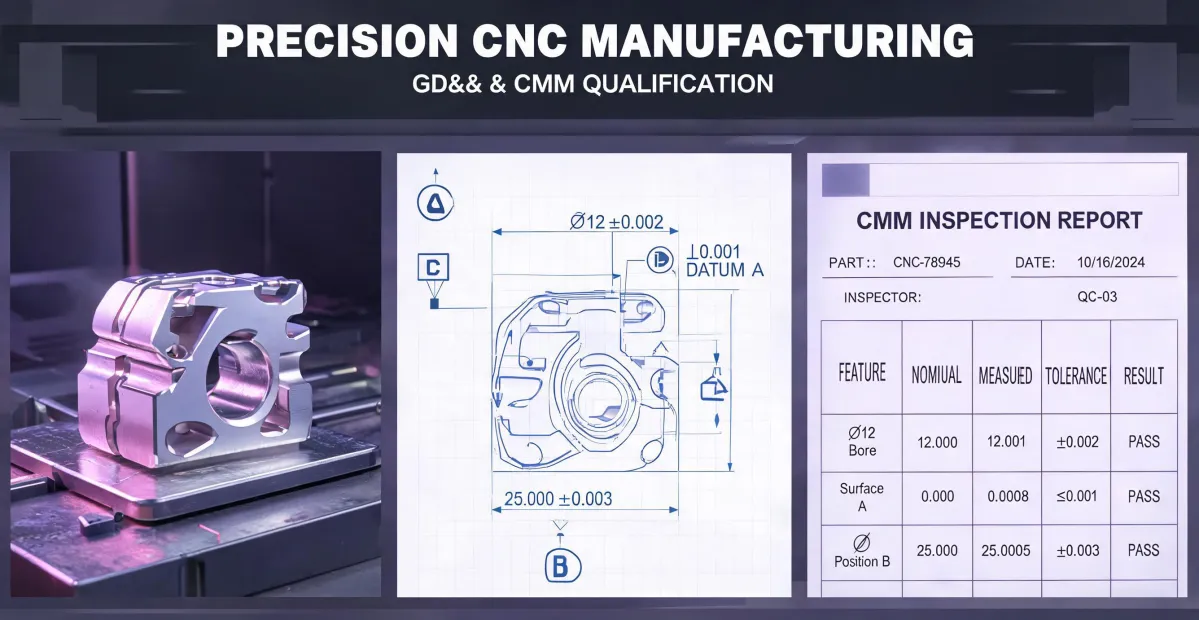
If you type “dmg-mori” into Google for the first time, you’ll see official product pages, resellers, and a long list of other machine builders. It’s easy to get lost. After 8 years of buying and integrating machine tools for job shops and aerospace suppliers, I’ve personally made—and documented—11 significant purchasing mistakes, totaling roughly $214,000 in wasted budget. Now I maintain our team’s pre-purchase checklist so the next person can avoid those same errors. This article is part of that checklist.
There is no single right way to buy a DMG MORI. This isn’t a lazy “it depends” answer. There are three distinct routes: buying a new machine from the DMG MORI products manufacturing portfolio, buying a used DMG MORI CNC machine for sale from a dealer or private seller, or going straight into metal additive manufacturing. Your job is to figure out which route matches your work, not which machine has the best specification sheet.
My experience is based on about 40 machine purchases and integration projects. If you’re in high-volume automotive, your process might differ. For the rest of us—job shops, tool and die, aerospace and medical components—this should map to reality fairly well.
Route 1: New DMG MORI Products Manufacturing
Buy new when you need to prove things: audit trails, calibration records, machine history, and repeatable tolerances. The full DMG MORI products manufacturing lineup includes turning centers, 5-axis machining centers, laser machines, and additive systems. You don’t need all of them. But if a customer asks you to demonstrate that your process is under control, a new machine with an OEM commissioning report removes a whole class of questions.
In 2023, we bought a new 5-axis machining center for an aerospace bracket family. The invoice hurt. The lead time hurt more. But the first PPAP audit passed without a single finding. We didn’t have to argue with an auditor about a machine’s previous life. That’s what you’re paying for: cleaner proof.
What most people don’t realize is that DMG MORI’s manufacturing ecosystem is modular. You can start with a single machine and add robotic loading later. I recommend later—unless you already have a two-year production forecast. (Should mention: our robot retrofit cost $22,000 more than if we had ordered it with the machine. The machine still paid for itself, but the extra cost stung.)
For current specifications, I rely on DMG MORI’s official documentation (dmgmori.com). I also use the CELOS system as a maintenance log. I want to say it can predict wear, but don’t quote me on that—we treat it as a disciplined record, and that’s already valuable.
Route 2: Used DMG MORI CNC Machine For Sale
If you don’t have audit requirements and your budget is real, then yes, a used DMG MORI CNC machine for sale can be a smart investment. “Can be” are the two words that matter. Used DMG MORI machines are still well-built machines. But the maintenance history is now part of the deal.
I still kick myself for not pulling the spindle load history on a CTX alpha 600 we bought in 2021. The price was fair: $61,000. The paint was clean. The way covers looked polished. Day three, the spindle sounded like a can of bolts. We found aluminum dust in the coolant lines and worn bearing races. The repair cost $8,400 and we lost a week. The previous owner had run it with improper tool holders and no scheduled maintenance. I could have caught that from the alarm log and the load reports.
Here’s something vendors won’t tell you: a 12-year-old DMG MORI with one owner and complete logs can be a safer buy than a 7-year-old machine with no records. High hours are not the problem. Inconsistent maintenance is. A machine that has run the same part in a clean shop for 5,000 hours is more predictable than a machine that sat in a warehouse for two years and had its coolant tank pressure-washed. To be fair, reputable dealers exist. If a listing includes a 90-day warranty, that’s worth a premium. But if a private seller won’t allow a ballbar test or won’t give you the spindle load log, walk away. If you ask me, a used DMG MORI without a service log is a liability, not an opportunity.
Our pre-purchase checklist is 14 points long. The first five, in order:
- Run the machine through a full warm-up and then a ballbar test at two different feed rates.
- Compare the actual spindle load log to the hours shown on the control.
- Inspect way covers and lubricant filters. Chips packed into the way cover is a sign of reactive maintenance.
- Ask for every alarm code from the last 12 months. This list tells you more than a sales brochure.
- Budget $18,000 to $45,000 for rigging, installation, tooling, coolant, and first-month repairs. This is based on our last five used-machine acquisitions.
That checklist has saved us an estimated $8,000 in avoided rework over the past 18 months. I might be misremembering the exact number, but the point stands.
Five minutes of verification beats five days of correction.
Route 3: Additive Manufacturing and the 3D Laser Printer for Metal
Additive is where I’ve seen the most wasted capital, outside of buying a used machine without checking logs. I have mixed feelings about it. Part of me loves what a 3D laser printer for metal can do. Another part remembers that most shops don’t need one until they have a specific recurring part.
Here’s the first thing to understand: a 3D laser printer for metal is not a printer. It’s a laser powder-bed fusion process with CNC-grade motion control. It needs a closed chamber, high-power laser, inert gas, and metal powder that has to be stored and handled like a hazardous material. The machine also produces parts that almost always need stress relief, support removal, and a final machining pass. That’s not a feature gap; it’s the physics of the process.
The question “why 3d printers are not used at home” comes up in our shop whenever someone sees a YouTube video of a metal part being printed and assumes this is the next household gadget. It isn’t. For plastic, the answer is simple enough: per-part cost is higher than a store-bought part, and calibration time eats weekends. For metal, the answer is more direct. A metal 3D printer’s laser can melt alloy powder; the powder is flammable, easily inhaled, and the machine exhaust must be filtered to industrial safety standards. You wouldn’t want one in a garage, and you definitely don’t want one in a living room. That’s not a marketing limitation. It’s a safety limitation.
If you are researching this for a grant application or a government contract, the additive manufacturing NAICS code is 333248 as of the 2022 NAICS revision (Source: U.S. Census Bureau). That classification helps with procurement paperwork, but it doesn’t tell you whether your application is economically viable. The viability question comes from your own part data.
On the DMG MORI side, the LASERTEC 3D series is the product family for metal additive and subtractive manufacturing in one work area. According to DMG MORI’s official website, the hybrid approach can machine critical surfaces between build layers, which helps compensate for distortion. If you’re making jet engine brackets, conformal-cooled injection mold inserts, or repair parts for aerospace components, this can be a real production solution. But if you don’t have a recurring part yet, the most preventive move you can make is to send test builds to a service bureau before you buy a machine.
We did exactly that in Q4 2024. A mold insert with internal cooling channels couldn’t be machined with the standard tools we had. We contracted build time from an additive service provider first. That test cost $1,900 and saved us from a $480,000 machine purchase that would have generated two prototype builds and then sat idle. The business case still isn’t there for us yet. When it is, we’ll know the exact part, the exact material, and the expected build volume.
How to Determine Which Route You’re In
Here’s the decision logic I use now, after the expensive lessons:
Route 1 (new) is for you if you have a multi-year contract with customer audit requirements. Traceability and documented process capability are part of your deliverable. Buy new, integrate it properly, and don’t let finance talk you into a used machine for a program that requires proof.
Route 2 (used) is for you if you have no audit burden, a defined part family, and a budget ceiling. Search for used dmg mori cnc machine for sale with a dealer who offers a warranty, and use the checklist. The one-time inspection cost is the cheapest insurance you’ll ever buy for capital equipment.
Route 3 (additive) is for you if a specific customer part already requires features that can’t be machined conventionally. If your reason is “3D printing is the future,” that’s not a purchase justification. Run test builds outside, then build the ROI case.
I should add one more limitation: I’m most comfortable with job shops and aerospace or medical suppliers. High-volume automotive production has different economics, and I can’t speak to that. But the logic of matching risk to documentation applies to almost every metal part I’ve touched. The tools are all capable. The difference is how much you know before you buy—and whether you’re willing to spend five minutes verifying today instead of five days correcting next month.
Last updated: March 2025. Machine models, availability, and classification details can change. Verify current specifications with DMG MORI and current NAICS definitions with the U.S. Census Bureau before signing anything.