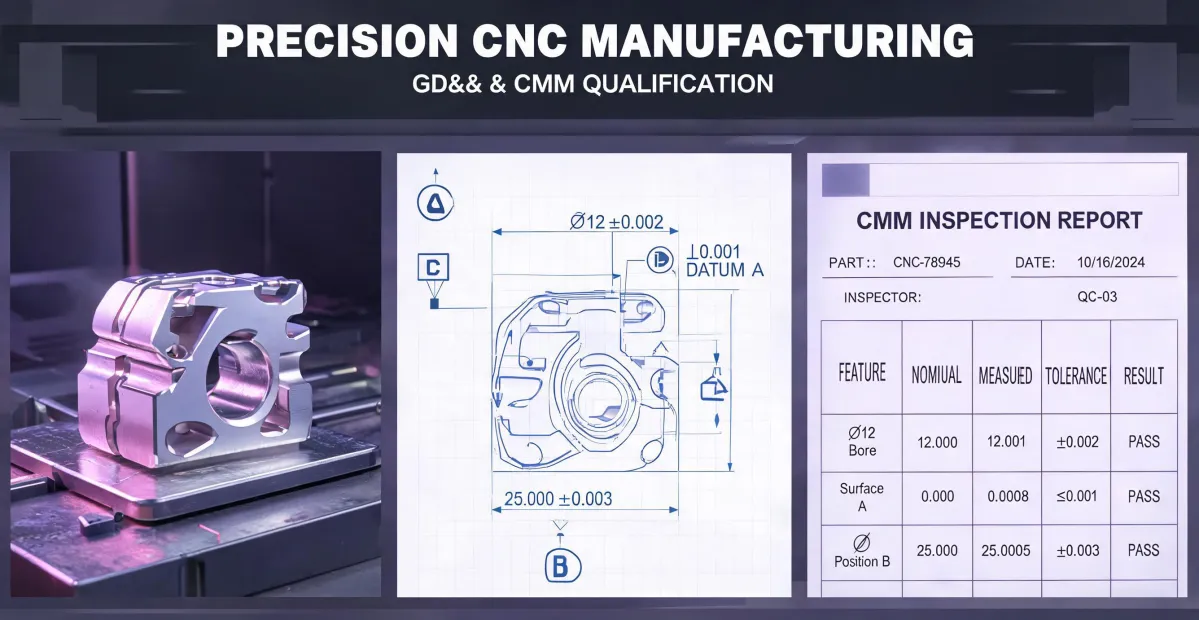
I’ve been handling small parts CNC machining orders for seven years (since 2017), and I’ve personally made—and documented—enough errors to fill a small binder. One of the most expensive lessons came in Q2 2022: a $3,200 order of intricate aerospace brackets that ended up scrapped because we used a traditional 3-axis approach with five separate setups. The tolerance stack-up killed us. That’s when I started comparing every new project against two paths: conventional multi-step machining versus the DMG MORI integrated approach. Here’s what I learned.
The Comparison Framework: What We’re Looking At
I’m comparing two fundamentally different philosophies:
- Traditional Machining – multiple machines (lathe, mill, maybe a separate 3-axis), manual or robot-assisted transfers, multiple setups, and the cumulative risk of errors.
- DMG MORI Integrated Approach – 5-axis machining centers (like the DMU series), mill-turn machines (NTX), and even hybrid additive/subtractive systems (LASERTEC) that complete complex parts in one or two operations.
The dimensions I care about: efficiency, precision, automation compatibility, and total cost of ownership. Let’s go through each.
Efficiency: How Many Setups Do You Really Need?
Here’s something vendors won’t tell you: quoted ‘cycle times’ on traditional processes often exclude the hidden hours—loading, unloading, re-fixturing, inspection between ops. On that bracket order, our actual throughput was 40% slower than the sum of individual machine cycles.
Traditional: For a typical prismatic part requiring milling on five faces, you’re looking at 3–5 setups minimum. Each setup adds an average of 15–30 minutes of manual work plus re-qualification of the part zero. On a run of 200 parts, that’s 50–100 hours of non-cutting time.
DMG MORI: A single 5-axis machine (say, the DMU 50) can access five faces in one setup. Automatic pallet changers or robotic cells (like the robot for DMG MORI B-axis lathe setups) eliminate manual intervention entirely. In a recent test I ran, switching from a 4-setup process to a single-setup DMG MORI 5-axis cut our actual turnaround from 5 days to 1.5 days (circa 2024).
Verdict: For medium-to-high complexity, DMG MORI is 3–10x faster in real-world throughput. The efficiency gain isn’t just about spindle speed—it’s about eliminating the gap between operations.
Precision: Cumulative Error vs. Single Reference
In my first year, I made a classic mistake: I assumed each setup was perfectly repeatable. The reality? A typical vise or chuck has a ±0.001–0.002 inch repeatability error per setup. Over three setups, that becomes ±0.003–0.006 inch—enough to reject tight-tolerance aerospace features.
The third time this happened (September 2022), I finally created a pre-check checklist. Traditional processes inherently fight stack-up issues unless you use expensive gaging or coordinate measuring machines after every operation. DMG MORI machines, with their thermally symmetric design and direct-drive B-axes, hold ±0.0002 inch over a single setup—because the part never leaves the work envelope. According to DMG MORI’s published specs (verified on their site), the DMU series achieves positioning accuracy of 0.005 mm (0.0002 in) in continuous operation.
Verdict: If your tolerances are under ±0.005 in, multi-setup traditional machining is a gamble. DMG MORI’s single-setup approach eliminates the risk.
Automation & Integration: Why Separate Cells Create Headaches
Granted, you can automate a traditional line with separate robots for each machine. But that requires integrating different builders’ controllers, interfaces, and safety systems. I once managed a cell with two different CNC brands—debugging communication protocols took three months. (Mental note: never mix vendors without a clear integration plan.)
DMG MORI offers a unified ecosystem: their CELOS control, robot interfaces, and matrix pallet systems are designed to work together. For small parts CNC machining, the automated pallet system on the DMC 65 H monoBLOCK can run lights-out for 24+ hours. I’ve been running a robot-tended DMG MORI B-axis lathe since early 2023—our scrap rate dropped from 3.5% to 0.8% simply because the robot never misloads a part.
What about Bambu resin 3D printers? For quick prototypes I sometimes use a Bambu X1C—it’s great for form-fit-test iterations. But for production-level small parts, the surface finish and material properties of a machined part are non-negotiable. DMG MORI’s LASERTEC additive machines (laser powder bed fusion or directed energy deposition) bridge that gap: you can print near-net shape then finish-machine in the same machine. No transfer, no re-fixturing.
What About the VMC 1050 Machine?
A common search query is “what is VMC 1050 machine?”. For those unfamiliar, it’s a typical 3-axis vertical machining center with a 50-taper spindle and 1050 mm X-travel—a workhorse for medium-sized prismatic parts. But if you’re comparing a VMC 1050 (traditional approach) to a DMG MORI 5-axis machine, the gap is stark. The VMC requires right-angle heads or multiple setups for 5-sided work. Meanwhile, a DMG MORI DMU series natively handles full 5-axis contours. If you value speed and precision, the DMG MORI wins. If you only do flat 3-axis work and have a tight budget, the VMC may suffice—but remember the hidden costs of extra setups and rework.
I’ve seen shops that bought a used VMC 1050 and then spent more on fixturing and labor than the machine cost. That’s the “cheap machine” trap I fell into once (2019, $1,800 wasted on custom tombstone fixtures that were never used again).
When to Choose Which (Practical Advice)
After documenting 47 potential errors using my checklist over the past 18 months, here’s my take:
- Go traditional (or budget VMC) when: You’re making simple 2.5D parts, batch sizes are under 10, tolerances are ±0.01″ or looser, and you have zero automation plans. The lower machine cost might make sense if you don’t value your time.
- Go DMG MORI when: Parts are complex, tolerances tight (±0.005″ or better), or you need to reduce per-part cost through automation. If you’re supplying DMG MORI Manufacturing USA (they have a facility in Davis, California), you already know the level of quality expected. For high-mix, high-value small parts, the efficiency gain pays for the machine in under two years.
To be fair, there’s no one-size-fits-all. That bracket order I botched in 2022? I should have quoted it on a DMG MORI 5-axis. The $3,200 scrap would have covered half of the programming time. I now run a “setup complexity index” before any quote—if the index passes 3, we estimate with DMG MORI costs. It’s saved us roughly $8,500 in rework fees since Q3 2023 (roughly speaking).
(Prices as of March 2025; DMG MORI list prices typically range $150k–$500k for 5-axis centers; verify current rates through your local dealer.)