-
For 80% of shops, DMG MORI is overkill. For the other 20%, it's the only machine that makes financial sense.
-
Why You Should Trust This Take (And Where I'm Limited)
-
A Quick Story That Changed My Perspective
- When DMG MORI Makes Sense (And What to Look For)
-
When to Look Elsewhere
-
The Hidden Costs Nobody Talks About
-
Final Take: A Honest Framework
For 80% of shops, DMG MORI is overkill. For the other 20%, it's the only machine that makes financial sense.
I've processed about 60 machine orders in the last four years—everything from used Haas mills to full DMG MORI 5-axis cells. I'm not a machinist or a process engineer. I'm the person who has to make the purchase work on paper for finance and in reality for the floor.
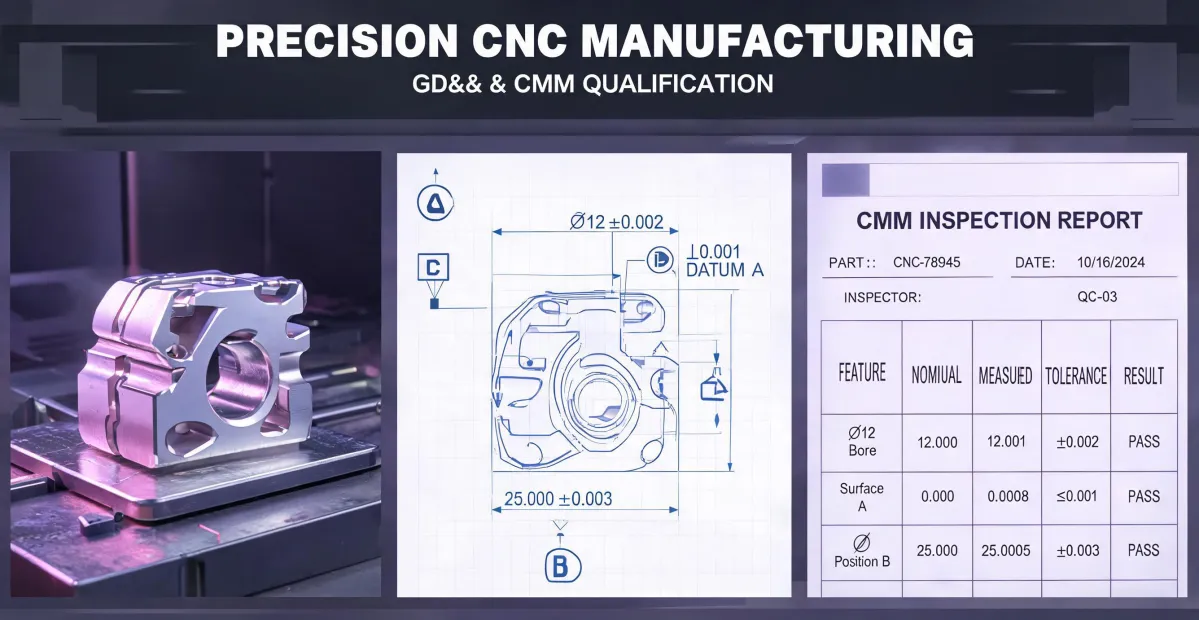
Here's what I've learned: DMG MORI is a no-brainer if you're doing high-precision aerospace or medical work. For general jobbing or high-volume low-mix production, you're probably paying for capability you won't use.
Bottom line: I recommend DMG MORI when your parts need tolerances under 10 microns, you're running lights-out with automation, or you need five-axis simultaneous machining. Outside those scenarios? I'd look elsewhere. Let me explain why.
Why You Should Trust This Take (And Where I'm Limited)
I manage purchasing for a mid-sized contract manufacturer—about 200 employees across two locations. We've bought roughly $8 million in CNC equipment since I took over procurement in 2021. We own two DMG MORI NLX 2500 lathes, a DMU 50 5-axis, and have evaluated (and rejected) their laser texturing line.
But here's the caveat: my experience is mostly with mid-range part sizes (basketball-sized and smaller). I can't speak to large gantry mills or heavy-duty oil & gas machining. If you're turning 10-foot shafts, this guide probably doesn't apply.
A Quick Story That Changed My Perspective
Early on, I pushed for a lower-cost turning center from a competitor for a new aerospace job. The spec sheet looked comparable. The price was 40% less. My boss was skeptical—he'd run Mori Seiki machines for 15 years.
He was right. The cheap machine couldn't hold the 8-micron bore tolerance on a titanium housing. We spent $12,000 on tooling adjustments and still scraped nearly 30% of the first run. The DMG MORI we eventually bought held it without a problem. That lesson cost the department budget but saved my reputation (barely).
That's what I mean: for the right job, DMG MORI is a game-changer. For the wrong one, it's just expensive iron.
When DMG MORI Makes Sense (And What to Look For)
1. High-Precision, Complex Work
If your prints call out tolerances under 15 microns or you're doing five-axis contouring on hard metals, DMG MORI's thermal stability is real. Their machines have a coolant-through-spindle design and box-way construction (on some models) that other brands don't match at the same price. The DMU series in particular handles multi-axis work better than anything I've seen under $500k.
For reference, our DMU 50 has been running nearly non-stop for 18 months. Recalibration frequency: once (after a crash). Our previous machine (a 2019 Okuma) needed quarterly adjustments.
2. Automation Integration
DMG MORI's strength isn't just the machine—it's the ecosystem. Their robot loading solutions (like the RPS system for the NLX lathes) plug in without custom programming. If you're planning lights-out operation, this integration alone can justify the premium—figure $30-50k saved in integration costs vs. retrofitting another brand.
We integrated a robot with our NLX 2500 in about three weeks. A competitor's machine with a similar robot took six months and still has issues with part-present sensing.
3. Swiss-Type Work (Not Their Strength, Actually)
Wait—I should be honest: DMG MORI isn't the top choice for Swiss-type turning. That's more of a Citizen or Star domain. But for combined turning and milling on bar stock up to 65mm, their NLX series with B-axis is surprisingly capable. We run complex valve bodies that would otherwise need two operations.
Here's the boundary though: if 90% of your work is simple turn-only parts, the B-axis is a waste. You're paying $40k+ for a feature you'll use maybe once a month.
When to Look Elsewhere
I've been burned by assuming DMG MORI is always better. It's not. Here are three situations where I'd recommend alternatives:
- High-volume, simple turning: A Doosan or Hyundai Wia will do the same job at 60% of the cost. You don't need German engineering for a 10-micron turning pass on 12L14 steel.
- Budget constraints under $100k: DMG MORI doesn't compete well here. Look at Haas or used equipment. You'll get more machine for the money (just expect more maintenance).
- Extreme heavy cutting: Their small machines are great, but their large gantries are expensive. A Mazak or Okuma might make more financial sense for huge parts.
If you're in the first group—simple work—I'd recommend Doosan's Puma 2600 for turning or Haas VF-2 for milling. They're not as pretty. They won't hold single-digit microns all day. But they'll make money reliably.
The Hidden Costs Nobody Talks About
I'm not a logistics expert, so I can't speak to carrier optimization (like how to ship a 15-ton machine). But from a procurement perspective, here's what I've seen:
- Tooling ecosystem: DMG MORI uses a specific Capto interface on some spindles. If your shop is all HSK, that's an $8-12k adapter cost per machine.
- Training: Their control (CELOS) is different. Figure $4k per operator for training, plus lost production time.
- Spare parts lead time: Critical items (like spindles) can take 12-16 weeks. They're reliable, but if one fails, you're down. We now stock a spare spindle for our highest-uptime machine (note to self: remember to rotate it every six months).
Final Take: A Honest Framework
So, how do you decide? Here's the process I use, and it's served me well for about 60 machine selections:
- Map your top 5 parts by volume and the tolerances they require.
- If any of them need under 15 microns or 5-axis contouring, DMG MORI should be on your shortlist.
- If they're all loose-tolerance (20+ microns) and 3-axis, save your money and buy a lower-cost brand.
- Consider automation plans. DMG MORI's integration is a premium, but it's often cheaper than third-party integration done wrong.
- Add 15-20% to the machine price for tooling, training, and spare parts.
My experience is based on about 60 mid-range orders for part sizes under 24 inches. If you're working with huge prismatic parts or extremely small medical devices, your needs might differ. I'd recommend consulting with a process engineer who knows your specific application—I'm just the guy who signs the PO.
Bottom line: DMG MORI is a great tool for a specific job. It's not the answer for every machining problem, and pretending it is would be dishonest. If you're that 20% shop doing precision work, you'll love it. If you're the other 80%, you'll probably just be annoyed at the cost. That's not a defect of the machine—it's a mismatch of expectations.