-
I Used to Believe the Brand Was Enough
-
The Machine Is a Capability, Not a Promise
-
The 40-Dollar Expandable Reamer Set That Caused an 8,000-Dollar Rework
-
A Laser Cutting Service Manchester Buyer Recommended Taught Me the Same Lesson
-
And No, a VMC Is Not a Beer
-
What I Actually Look For
-
The Bottom Line: Quality Is a Process, Not a Badge
I'll say it plainly: I don't buy machine tools based on the nameplate. I've rejected parts that came off brand-new DMG MORI machines, and I've accepted parts from shops with older, less glamorous equipment. The difference was never the machine alone. It was the manufacturing discipline around it. If you want to understand quality, you have to stop asking what machine did they buy and start asking how do they prove the part is right.
A machine tool is a capability, not a promise. The promise is only as good as the process around it.
I Used to Believe the Brand Was Enough
When I first started in quality, I had the same assumption a lot of buyers have: buy good equipment, get good parts. I remember walking into a job shop that had just installed a new DMG MORI five-axis machine and thinking, okay, this should be easy. It wasn't. The first article came out with chatter marks and an out-of-round bore. The operator had the right spindle and the wrong feeds and speeds.
That was my initial misjudgment. It took me a while to realize that the machine is one component in a system, not the system. What I mean is: the machine sets the maximum possible quality, but the process determines the actual quality. A great machine can make a bad part if the tool, holder, workholding, coolant, or program is wrong.
The Machine Is a Capability, Not a Promise
DMG MORI manufacturing is often described as a benchmark in precision machining, and I won't argue with that. DMG MORI products span turning, milling, five-axis machining, ultrasonic, laser, and additive manufacturing. That breadth is impressive. But a brochure is not a quality system.
Whenever someone quotes a positioning spec from a machine tool datasheet, I ask a simple question: under what conditions? A linear scale can show impressive accuracy numbers under ISO 230-2, measured with the machine leveled, warmed up, and calibrated. Your part, on the other hand, is made after a shift change, with a worn end mill, and a coolant concentration that hasn't been checked in two days.
To be fair, the spec sheet matters. It tells you what a DMG MORI product is capable of. But after four years of reviewing incoming parts, I've learned to look at what's outside the spec sheet: tool holders, fixture design, inspection methods, operator training, maintenance schedules. That's where quality is won or lost. I'm not saying you should buy a worn-out machine and call it a day. That's another failure mode. A stable, capable machine tool is necessary, especially for five-axis work where you're chasing complex contours and tight positional relationships. But the line that says we have a DMG MORI appears on supplier forms for a reason. It's a qualifier, not a proof.
The 40-Dollar Expandable Reamer Set That Caused an 8,000-Dollar Rework
One of the most humbling inspection failures I saw had nothing to do with a machine tool brand at all. A vendor was producing a stainless steel manifold for us. They had a new five-axis machine, good CAM software, and a workholding fixture that cost more than my car. The bore quality was inconsistent. We rejected three batches before they found the problem: a 40-dollar expandable reamer set.
The reamer's adjustment mechanism had worked loose. The blades were cutting at different effective diameters depending on where the tool contacted the bore. The machine was fine. The tool was not. If an expandable reamer set can ruin a thousand-dollar part, imagine what a process gap can do to a production run.
That experience changed how I audit suppliers. I now ask about tooling before I ask about machine models. I want to see how they store, inspect, and replace perishable tools. I want to see their edge-prep standards. The product nameplate tells me what they could do. The tooling tells me what they actually do.
A Laser Cutting Service Manchester Buyer Recommended Taught Me the Same Lesson
This lesson is not limited to chip-cutting machines. I once had to evaluate a laser cutting service in Manchester that our buyer had shortlisted. The company had a clean website and a quick quote. The samples were less impressive: excessive dross, inconsistent edge roughness, and a heat-affected zone that would have made welding painful.
I had 72 hours to decide before the engineering freeze. Normally I would have visited the facility and watched the laser run. There was no time. I asked for a dimensional report and a cross-section of cut edges. The report looked okay, but I didn't fully relax until the first production batch arrived. It passed. Barely. In hindsight, I should have pushed for more data, but with the deadline, I made the best call I could with incomplete information.
Why do I mention this? Because the same quality-perception logic works with any vendor. Your customer doesn't know which laser cutting service in Manchester you used. They see dross, edge taper, and burrs. That is your brand at that moment. No logo covers it. If you need a laser cutting service Manchester can trust, ask for edge-quality data first. Quality perception is not about the machine brand. It's about whether the person receiving the part can look at it and immediately trust the next batch.
And No, a VMC Is Not a Beer
Now, about one of the stranger search terms that lands people here: is vmc beer? No. In machining, VMC stands for vertical machining center. It is a machine tool, not a beverage. I get it, acronyms overlap. There are beers that share initials. But if you're evaluating DMG MORI products or any VMC, the question to ask is not whether the machine is refreshing, but whether it can hold tolerance on your parts after a full shift.
This may sound like a joke, but it's actually a useful filter. We treat brand names and acronyms like badges, as if the name itself contains quality. A VMC is not a badge. It is a tool. It doesn't get to be good because of the paint color or the logo. It earns that word through spindle runout readings, thermal stability, and the parts it actually produces.
What I Actually Look For
So what transforms a DMG MORI machining center into a manufacturing advantage? The same thing that makes a cheap expandable reamer set acceptable: verification. I look for evidence that the supplier knows the difference between a part that is close enough and a part that is demonstrably correct.
- Calibration stickers that haven't expired, and not just on micrometers.
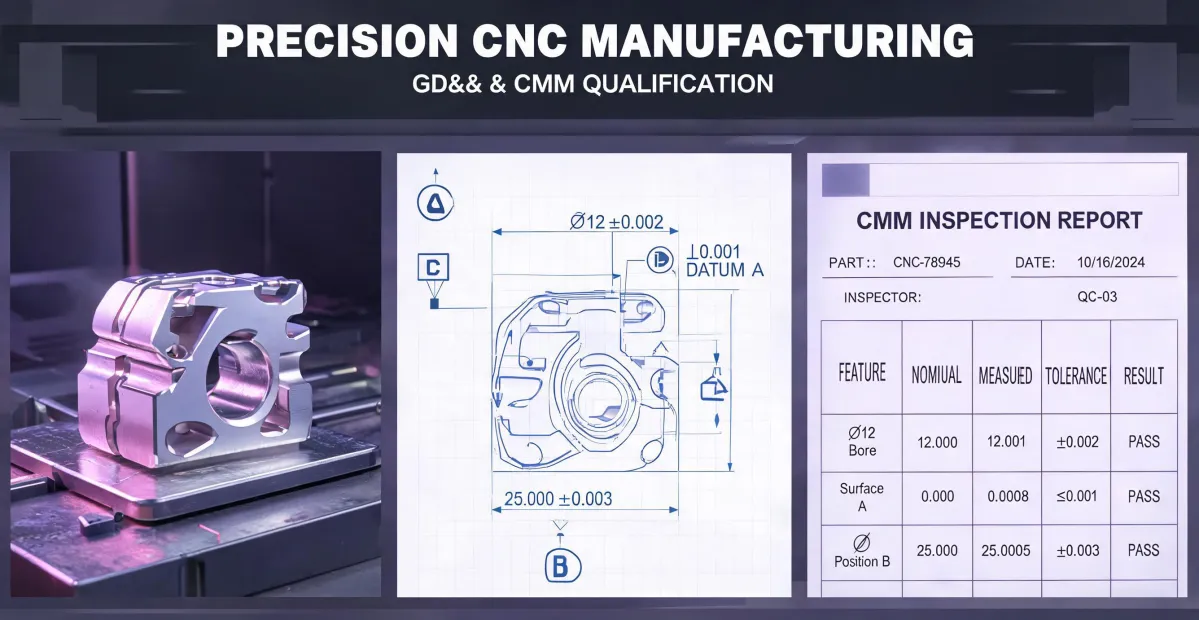
- First-article reports that include actual measured values, not OK comments.
- Tooling storage rules, because a reamer set can become 8,000 dollars in rework when it's not maintained.
- A clear owner for every quality document. If everyone is responsible, no one is.
I also watch what happens when a part doesn't match the drawing. Do they quarantine it, flag it, and document it? Or do they quietly remake it and hope no one asks? That tells me more than any machine model ever will. When I implemented a stricter incoming inspection protocol in 2022, the effect on our production schedule was immediate. We caught problems before they reached the line. That saved us the worst kind of quality issue: the one that happens after the customer sees the part.
The Bottom Line: Quality Is a Process, Not a Badge
I hear the objection all the time: we don't have time for all this verification. That's exactly the attitude that destroys quality perception. When you skip the check because you're under pressure, you're not saving time. You're betting the customer's trust against your schedule.
DMG MORI manufacturing and machine tool engineering give you an incredible starting point. But the reason I'm so persistent about process is not because I don't trust the machine. It's because I've seen what happens when someone relies on the name alone. The brand can open doors, but only the output of your process keeps them open.
Put another way: buying a DMG MORI doesn't make you a precision manufacturer. It gives you the tool to become one, if you build the process around it. I've made that mistake. I've learned it the hard way. At least, that's been my experience with high-mix, low-volume work where every job has a different tolerance and a different risk profile. So if someone asks me which DMG MORI product to buy, I usually ask what happens after the purchase. The machine is part of a process. The process is part of a brand. And the brand lives or dies on the last part you shipped.