If you call me at 4 p.m. with a part that has to ship tomorrow, I'm not going to give you a brochure answer. In my role coordinating emergency production for manufacturing clients, I've had to choose between CNC machining and 3D printing more times than I can count—sometimes with a $50,000 penalty clause hanging over the job. This comparison is how I actually think through it.
I'd rather lose the job on an honest quote than win it with a fake one.
The comparison framework: four questions I ask on every rush job
I don't start with 'which technology is better.' I start with four things: How fast do we need the first good part? What tolerances actually matter? What's the total cost if something goes wrong? And who's going to run this tomorrow? If you can answer those four, the CNC vs. 3D printing decision gets a lot simpler.
Round 1: speed to first good part
From the outside, it looks like 3D printing is the fastest way to make a part because there's no fixture and no toolpath to prove out. The reality is that setup shows up later—in post-processing, failed first layers, and supports that have to be removed. (Not that this always happens, but it happens more often than the marketing photos suggest.)
That said, a 3D printer can be running while you're still editing the CAM file. For a one-off plastic prototype with weird geometry, that speed is real. I've had parts go from CAD to printed in under two hours, which no CNC shop can match without an existing setup.
But 'first good part' is the key phrase. If the part is metal and needs to carry a load, a 3D printer is not necessarily faster once you add print time, heat treat, and post-machining. A DMG MORI Swiss lathe or machining center can cut the same bracket in minutes once the tools are in the turret. The real time sink is programming and setup—which is why I keep old CAM files like they're gold.
One workaround is offline simulation software that lets you prove out toolpaths before touching metal. There are a lot of options out there, and you'll see names like VMC Soft Technologies Inc. when you start researching. It doesn't make CNC as easy as hitting print, but it catches the mistakes that blow up emergency deliveries.
Round 2: precision and material integrity
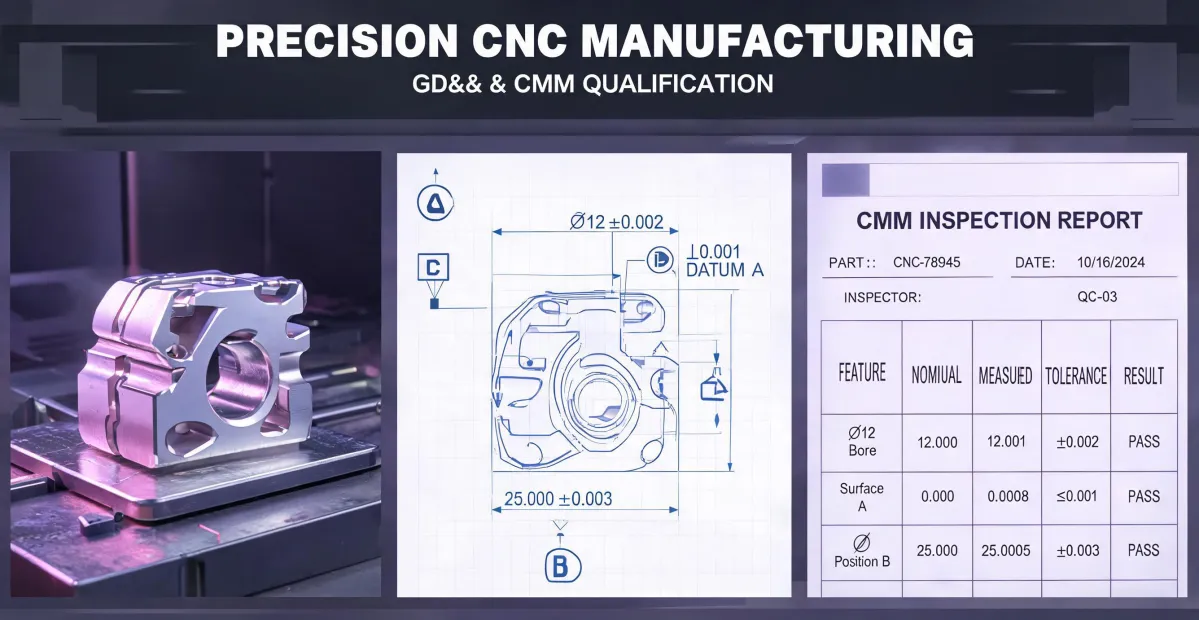
This round rarely ends in a tie. A production CNC machine holds tolerances that most 3D printers can't touch. When I quote a part for a customer, I usually work to ISO 2768-m or tighter. A DMG MORI machine with good tooling can hold single-digit micron repeatability. That's not a flex—it's what the job demands when the part goes into an assembly line.
3D printing is getting better, but layer lines and anisotropic strength are still real. A printed bracket can look perfect and still fail along a layer plane. For prototypes and non-structural parts, that's fine. For a replacement part that keeps a machine running, it's a gamble I won't take.
Granted, industrial metal 3D printers are not the same as desktop FDM machines. But they bring their own complexity: shrink rates, support removal, and secondary machining. That's where the emergency timeline gets scary.
Conclusion for round 2: if the part is structural or tolerance-critical, CNC is the safe call. It's not a brand thing. It's a physics thing.
Round 3: the cost nobody quotes upfront
This is where I get annoying. The FTC's advertising guidance (ftc.gov) says claims should be truthful and not misleading. I wish every quote I received followed that rule.
It's tempting to think you can compare material cost per pound and call it a day. But identical CAD files can produce wildly different outcomes depending on machine calibration, operator experience, and hidden fees. Setup, tooling, rework, failed prints, and express shipping add up. (Think 20-30% on top of the quote, if you're lucky.)
I'll give you a real example. In March 2024, a customer needed an aluminum bracket 36 hours before a line shutdown. Three 3D printing services quoted $400 to $900 with 2-4 day lead times. That wasn't fast enough. We ran the job on a DMG MORI machining center using a saved CAM file, charged $850, and delivered in 18 hours. No surprises. The customer didn't care about the technology. They cared that the part showed up.
The other side of this is what I call the 'cheap print curse.' You can buy the best table for 3D printers on the market and still get a failed print at hour 22 because the build plate wasn't clean. A $60 material cost becomes a $400 problem when someone is waiting on that part.
Conclusion for round 3: the lowest base price is often the most expensive outcome. I've learned to ask 'what's not included' before 'what's the price.'
Round 4: how long does it take to learn CNC machining?
The question I hear most often is, 'how long does it take to learn CNC machining?' The honest answer: enough to be dangerous is a week. Enough to be reliable is a few months. Enough to be fast is years. The same is true for 3D printing, honestly—getting a benchy to print is easy, but getting a functional part to come out right every time is a different skill.
For CNC, you've got G-code, tooling, workholding, offsets, and machine-specific quirks. I've trained operators who were running parts in weeks, but they made mistakes that cost money first. That's not an argument against learning it. It's an argument for using simulation and checking your work.
If you're shopping for a machine, the DMG MORI website is one of the better places to start. It lists traverse speeds, spindle torque, and tool capacity on every spec sheet. That's more useful than the marketing language. (Which, honestly, tells you more than the brochure photos do.)
Conclusion for round 4: 3D printing is easier to start; CNC is easier to master once you have good habits. And the software you choose matters for both—looking into vendors like VMC Soft Technologies Inc. is part of that.
So which one do I choose?
Use the scenarios, not my personal bias:
- If the part is metal, structural, or tolerance-critical: CNC. A DMG MORI Swiss lathe or machining center is the safe answer.
- If the part is a one-off plastic prototype with complex geometry: 3D printing.
- If the design is still changing tomorrow: 3D printing, because you can't edit a CAM program faster than you can edit a slicer file.
- If you already have a proven CNC program: CNC, by a mile. Save those CAM files.
Final thought
Don't let a vendor sell you a technology. Let them show you a process. If they can't tell you what happens when a part fails, they're not ready for your emergency. Transparency and trust matter more than the claimed speed of any machine.